
 Listen

CapMetro’s system of electric-assisted bicycles will soon be back on Austin’s roadways — but it will be returning in phases, starting small. We’ll have the latest on Austin’s Bikeshare and the fire that hindered service.
We’re a couple weeks removed from the World Cup, but FIFA, the organization behind the tournament, has remained in the headlines. The reason? A proposal to sell shares of the quadrennial event. We’ve got more context and the latest on Austin’s soccer team.
And deaf children and families will have more options for accessible TV programming after one platform announced plans for more American Sign Language interpretations. We’ll catch up with a local performer participating in the project.
The full transcript of this episode of Austin Signal is available on the KUT & KUTX Studio website. The transcript is also available as subtitles or captions on some podcast apps.
Jerry Quijano [00:00:08] Cap Metro’s system of electric-assisted bicycles will soon be back on Austin’s roadways, but it’s going to be returning in phases, starting small. The latest on bike share, and the fire that hindered its service. And we’re a couple weeks removed from the World Cup, but the organization behind the tournament has remained in the headlines. The reason? A proposal to sell shares of the quadrennial event. We’ve got more context, and latest on Austin soccer team, that’s coming up on today’s show.
KUT Announcer: Laurie Gallardo [00:00:35] The Austin Signal is a production of KUT News, hosted by Jerry Quijano.
Jerry Quijano [00:00:40] Plus, deaf children and families will have more options for accessible TV programming after one platform announced plans for more American sign language interpretations. We’re gonna catch up with a local performer who is participating in the project. Those stories and more up next right here on Austin Signal. Howdy out there, this is Austin Signal, thank you for tuning in, I’m your host Jerry Keconnell. It is Tuesday, August 4th. CapMetro Bikeshare is coming back to the streets of Austin, that’s one week from today, but it’s doing so in a limited way, at least at first. The rentable electric bike service has been shut down since Memorial Day weekend, that’s when a fire at a CapMeto facility destroyed a bunch of batteries and chargers. As KUT’s Nathan Bernier reports, several questions about that fire are still unanswered.
fire fighter [00:01:41] We’ve got a hose on directly to the fire. We believe it’s batteries while they’re popping off.
Nathan Bernier [00:01:47] Firefighters communicating by radio as they fought the flames and heat at a cap metro facility on East Menwied Boulevard. That was the night of May 23rd. The fire was traced to a room filled with bike-share batteries. About a quarter of those batteries were destroyed, and most of the chargers were damaged.
Eric Stratton [00:02:05] Is there any chance that we’re going to be able to get coverage under our insurance to get some of the lost batteries and bikes? The material within the building, the contents of the building is not covered by insurance. Is not? Is not covered insurance.
Nathan Bernier [00:02:19] That was Cap Metro board member Eric Stratton questioning Chief Operating Officer Andy Skabowski last week. Cap Metro still has not publicly said how much it will cost to replace everything, nor has the transit agency announced what caused the fire. Cap Metro hired a forensic investigator called Rimkus to look into it, and that report has not been released yet. But Skabowsky says some of the electric-assist bikes will start appearing in docks again starting Tuesday, August 11th.
Eric Stratton [00:02:46] We’re looking at putting out about a quarter of our fleet, about 150 bikes, and a lot fewer stations, with the core focus being on the UT campus and the rides that occur within that campus.
Nathan Bernier [00:02:58] People will be able to drop off their bikes at any of the 80 or so bike share stations, but Cap Metro workers may move them back to the UT campus area, or take the bikes to the dozen or so bikeshare docks that can actually charge them. Once Cap Metro gets its central charging facility on Ben White back up and running, more bikes will roll out. Full bike share service is expected to be restored sometime before the end of the year. I’m Nathan Bernier in Austin.
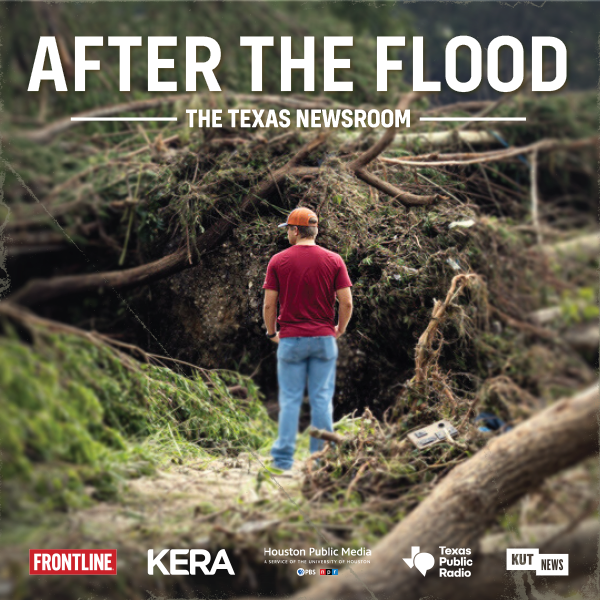
Jerry Quijano [00:03:31] People in South Central Texas are still cleaning up after another round of intense flooding last month. It came just days after residents marked the one-year anniversary of 2025’s devastating July 4th flood. That tore through the Texas Hill Country and killed more than 130 people, mostly in Kerr County. We have been documenting the aftermath in After the Flood, that’s a new podcast from the Texas Newsroom and PBS Frontline. The five-part series is hosted by Houston Public Media reporter Dominic Anthony Walsh, and the last episode was just released. We have a preview here for you today.
Dominic Anthony Walsh [00:04:08] Stuart Gross and his wife have lived in a home overlooking the Guadalupe River in Kerr County for 40 years, and in the early morning hours of July 4th, 2025, something happened that he never could have imagined.
Stuart Gross [00:04:21] We heard it rain all night long, you know, it was pouring all night, and I thought I heard evacuate.
Dominic Anthony Walsh [00:04:29] Around 4 in the morning, someone on his quiet street in the tiny town of Ingram, Texas yelling
Stuart Gross [00:04:35] evacuate. I stumbled to the kitchen window and I see flashes of emergency lights and I’m like, what’s the small town? I’ll be
Dominic Anthony Walsh [00:04:43] Chief, right? Called the town’s fire chief. Stewart was the code enforcement officer in this town of fewer than 2,000 people. So he had the fire chief’s number. But just as he was about to call. Phone rings. The assistant chief.
Stuart Gross [00:04:58] Called him.
Dominic Anthony Walsh [00:05:12] It was hard to process what was happening. Stuart and his wife live 37 feet above the river, and yet…
Stuart Gross [00:05:19] Coming to the neighborhood. You could feel the house shake, you could hear the roar. It was a very, very traumatic time.
Dominic Anthony Walsh [00:05:26] Stewart, his wife, their dogs, and their cats were all able to get out safely that day. After all, they got a personal phone call from the town’s assistant fire chief. Their home didn’t end up flooding because it’s on relatively high ground. But you can’t stop thinking about what happened at the two RV parks just down the road from him, a little closer to the banks of the river.
Stuart Gross [00:05:47] There’s a huge clump of cypress and we pulled, I don’t know, I think it was like 12 RVs wrapped around one tree. On top of each other, boom, boom boom boom. That’s scary. My mother nature don’t play.
Dominic Anthony Walsh [00:05:59] The Blue Oak RV Park was about a quarter mile down the road from Stewart’s home. You heard about it in episode 1. It’s where a family, including a 21-month-old, was swept away and died last year. Right next to Blue Oak was HDR Texas Hill Country RV Park, where more than 30 people died. HDR is actually the place in the Hill Country where the most people died last year, even more than at Camp Mystic.
Stuart Gross [00:06:26] Unless you were down there digging under things with your hands, looking for people, you don’t quite grasp it.
Dominic Anthony Walsh [00:06:37] This is After the Flood, a podcast from the Texas Newsroom and PBS’s Frontline. I’m Dominic Anthony Walsh. On July 4th, 2025, the Texas Hill Country was hit by one of the deadliest floods in U.S. History. At least 130 people died. Throughout this podcast, we’ve heard harrowing stories from people who barely survived. We’ve talked to a grieving father who turned his sorrow into action. We’ve taken you through changes the state made. For this episode, the final in the podcast. We planned to explore whether this part of Texas was more prepared for the next flood. And then… Deadly flooding in Texas. More than two feet of rain. Almost exactly a year later… Texas declaring a major disaster after more catastrophic floods. There was another one.
Meteorologist [00:07:22] A quote, large and deadly flood wave is barreling down the Guadalupe River, according to forecasters. That’s the very same river that took so many lives last summer at Camp Mystic.
Dominic Anthony Walsh [00:07:32] In mid-July, a massive storm dumped rain on the hill country in south-central Texas, swelling rivers and destroying hundreds of homes, roads, and businesses. At least three people died. And once again, Stuart Gross was right in the middle of it all.
Jerry Quijano [00:07:48] You just heard a selection from episode five of After the Flood, that’s a podcast from the Texas newsroom and PBS frontline examining the aftermath of last July’s deadly flooding. You can hear more of Stuart’s story, including how this year’s flood compared to 2025’s in the final episode, which is out now. Listen to After the flood wherever you get your podcasts. All right, we have a quick Austin ISD headline for you before we take a break. More than 8,200 actionable student safety incidents were flagged on Austin Independent School District-issued devices last school year. Austin Current reports that’s the highest number since the district began releasing the data with a third-party partner, and that increase included more than 1,000 additional incidents involving violence toward others, and about 700 more involving talks of suicide compared to the school year before. We have more about that reporting at KUT.org and on the KUT app, you’re listening to the Austin Signal. We will be back after a break. This is Austin Signal, welcome back. Deaf children and families will now have more options for accessible TV programming. That’s after Netflix announced this summer that it’s partnering with Sign Up Media to add American Sign Language interpretations to some 200 hours worth of kids and family shows. Joanne Benfield is an Austin-based performer and American Sign language interpreter who is part of that project. She spoke with host Miles Bloxson.
Miles Bloxson [00:09:27] So tell us a bit about your involvement in this project with Netflix and sign up media. What show have you been working on?
Joanne Benfield [00:09:35] So I’ve been working on the Magic School Bus. Actually the Magic school bus returns. It’s actually like an extension of the original Magic School bus, but it’s more modern. I did their season one and two and three of their short movies. Yeah, that’s pretty much what I’ve been doing over the past couple of months. And I’m so excited that it’s finally being released to the deaf community.
Miles Bloxson [00:10:02] That’s so cool. And this was sort of a like a full circle moment. You also did ASL interpretation for the original Magic School Bus series, correct? Yes, that’s correct. So what is it like revisiting the series with this new spin to it?
Joanne Benfield [00:10:18] It’s actually.
Miles Bloxson [00:10:19] It’s really different.
Joanne Benfield [00:10:20] Because I think these days a lot of the cartoons are sped up they’re like faster they’re more colorful they’re modern so interpreting it this time around was a little bit more challenging than the original season just because the speed is so different and I’m like oh my gosh but it’s incredible like I’ve so much just by interpreting and performing these. Episodes like it. It was just so much fun.
Miles Bloxson [00:10:52] And you said it is different. So in terms of the viewing experience, what are the differences in having a show interpreted into American Sign Language versus just having captions? And why is it so important for folks to have that option?
Joanne Benfield [00:11:06] Yes, well, the viewing experience is probably different this time around. I think it’s more of having access to sign language. We don’t typically have that readily available. So having this opportunity to provide that, it’s just amazing. Because these days, technology is off the charts. We have the technology. Why don’t you just use it? So being able to do that for Netflix is just… I’m just grateful for it. What? I’m Just grateful.
Miles Bloxson [00:11:40] No, it’s it’s amazing. So why do you feel like it’s important for folks to have that option though?
Joanne Benfield [00:11:47] Well, because language is not exactly universal. We all have different languages that we communicate in. And having American sign language as part of what we’re watching makes everything so much more accessible. Like deaf children, deaf and hard of hearing children are typically language deprived because they don’t have sign language at home. So they don’t have that access to constant communication but providing this like the match school bus for example or giving them access to their language that they eventually pick up and they’re able to learn the same type of content that hearing children are learning at the same time. So giving them the opportunity to be included I think that’s like the hugest thing ever.
Miles Bloxson [00:12:42] It’s so important and your work goes beyond TV. You also interpret music and concerts and there really seems to be an art to not just interpreting performances into ASL as a language, but also to bringing those interpretations to life with soul and emotion. What is your process and approach when you take on these various roles?
Joanne Benfield [00:13:04] Well, there’s research we have to do the research you also have to love what you do if you don’t have a passion for it It doesn’t come as easily But knowing what we’re doing like what the song is about what the episode is talking about That takes research like you have to really dig into it Like when I was doing magic the magic school, but that’s heavily science-based. So there’s a lot of scientific terminology that we don’t typically use on a daily basis, and that includes the actual sign language for those scientific terms. So it takes a lot of time to really get into it, do the research, make sure that I’m signing things accurately or everything is conceptually accurate, and this goes for music and concerts and all that stuff too. You really have to take the time to understand what you’re producing.
Miles Bloxson [00:13:58] How long did it take you to prepare for each episode?
Joanne Benfield [00:14:02] Depending on the episode it takes a couple of hours to more than a few hours like honestly that’s that’s a long time to take just for one episode but again science-based it’s not common you have to take that extra time to do the work plus you have to prep too like i have to watch these episodes like multiple times practice it make sure i’m signing it correctly it’s yeah That’s a lot, but again, it’s worth it.
Miles Bloxson [00:14:32] Yeah, I can only imagine. Well, how can folks watch your performance on Magic School Bus Rides again?
Joanne Benfield [00:14:38] Well, there’s sign up media. If you have to go to their web link, they have a Chrome extension that you can add to your Google Chrome. And they do have instructions on how to set it up, how to open their titles. They have a bunch of titles from different streaming platforms. So I do encourage you all to download it, add it to your, Google Chrome and. Just enjoy it. And if you have deaf and hard of hearing children, make the most of it. Like, this is such an amazing tool. It’s an amazing accessibility point. Like finally they get to be included.
Miles Bloxson [00:15:15] Joanne Benfield is an Austin-based American Sign Language interpreter and performer. Joanne, thanks so much for your time today.
Joanne Benfield [00:15:23] You know, thank you for inviting me. I appreciate it. And I hope you all enjoy the Magic School Bus return.
Jerry Quijano [00:15:37] All right, well, the World Cup is over, but news about the World’s game is sticking in the headlines as Europe’s top leagues prepare for their competitions to resume this month. And our local club is also staying plenty busy. For more about that, we are joined now by Juan Diego Garcia. He is one half of the hosting duo behind the Vamos a Verdad podcast, all about Austin FC. Juan, it’s always great to talk with you. Always a pleasure, Jerry. So we’re definitely gonna talk some Austin FC But I’m still basking in the glow or the afterglow I guess of the World Cup and there’s been some big news in that arena Over the past week week and a half that has been the reaction to Gianni Infantino’s proposal to sell Shares of the world cup who is Gianni infantino. Tell us a little bit about this proposal
Juan Diego Garcia [00:16:25] Yeah, so Gianni Infantino is the head of FIFA. FIFA is the global organization that sets up and runs the World Cup, as well as other large international tournaments, such as the Club World Cup. The Women’s World Cup and he had this idea to try to monetize the commercial aspects of the World cup. He put forth this plan to essentially create a separate private company that would take in private investors. And the idea is that when they put up the World Cup, they take over the commercial rights and everyone makes a lot of money. That proposal got pretty much universal blowback from the world of soccer and all of the different corners of it. There are host cities that are still waiting for money from FIFA just to have hosted the World cup. So for them to then say, hey, yeah, we’re gonna try to make a lot more money out of this. Monetize something that, you know, FIFA is a non-profit organization. The money that the World Cup makes realistically should be distributed back through the member nations. Infantino proposed it as a way for some of the smaller nations, like some of African nations, or some of Asian confederations, to make more money from their participation in the World Cup. But yeah, folks have not been too happy with the idea of the proposal, and it blew up pretty. Spectacularly in infantino’s
Jerry Quijano [00:17:51] There’s always discussion about how much pushback fans can have, especially here in America. European soccer fans seem to have a little bit more pushback on what they can demand of the organizations that represent them. So I think some people were shocked that this proposal from Infantino kind of fell flat. Were you shocked by it?
Juan Diego Garcia [00:18:11] I was not, no. As soon as the plan came through, I had my doubts, I had my questions, and the response to it has been, you know, maybe stronger than I would have anticipated. But it is in line with what I expected from a proposal like this for something like the World Cup.
Jerry Quijano [00:18:28] Okay, well let’s switch from the World Cup and look a little more locally. There has been an absence of World Cup games, but there has been a plethora of Austin FC games, so tell us how have they been doing in the two, two and a half weeks since the World Cup ended.
Juan Diego Garcia [00:18:41] They’ve played three games and they actually got off to a good start. They had a 3-1 win at home against Seattle. It was a very exciting game to be at. But since then, they’ve kind of tailed off. They’ve lost two on the bounce. One was a 3 nil loss in Houston to the in-state rival, the Dynamo, which is never a good thing for a fan base to take. Um, you know, there have been some encouraging signs, but, uh… You know, they got a long way to go if they’re gonna make a push for the playoffs, and it still feels like the team is, you know, have some good parts, but the whole hasn’t come together and these parts aren’t quite playing along with one another to the degree that you really need them to if you wanna, you know compete for something.
Jerry Quijano [00:19:27] Yeah, it’s got to be kind of funky, I would imagine, to play half a season, then go on this extended break, and then to come back to find a little bit of rhythm. Maybe you found something before the first half of the season ended, but kind of hard to get things going. The good thing is that they have more opportunities on the pitch to maybe find that rhythm. They’re participating in the League Cup this year. Remind us what that is, and how are they set up for that tournament? Yeah, the Leagues.
Juan Diego Garcia [00:19:52] Leagues a cup, okay. Because it pits Major League Soccer clubs against Liga y Mequis clubs, that’s a Mexican league. It’s 18 teams from both sides of the border, if you will. Obviously, Canadian teams are also included in Major League soccer. And, you know, the recent run from Austin might not inspire a lot of confidence, but This version of Austin has stepped up for big games and big tournaments in the past. Last year they made it all the way to the finals of the U.S. Open Cup, another one of those sort of in-season tournaments. The year before that they competed in the League’s Cup, they hosted games against two big Mexican clubs, Pumas and Monterrey, Rallados, and they got victories in both games. The performances were really good. So, you know, hope springs eternal when it comes to tournament season. And, uh, you could be having a terrible season in your regular season, if you will.
Jerry Quijano [00:20:48] Your irregular campaign?
Juan Diego Garcia [00:20:49] Right in your domestic league, but you know those tournaments they can always bring some some decent surprises
Jerry Quijano [00:20:54] Okay, well, you got a nice little surprise coming up this Thursday, that is a new interview airing on Vamos Verde, who are you going to be talking with?
Juan Diego Garcia [00:21:02] Forgive me if you are Polish, I am doing my best and I got coaching, but we’re speaking with the new winger that arrived on a free transfer in the summer from Oxford United, an English club. His name is Przemysław Blacheta, but he’s made things easy on us and he just goes by Blachi, for short. And we talked about a lot of cool stuff. I asked him what he would prefer, a cold, rainy English night to play soccer. Or a hot Austin Summer, I know my pick, and it’s not what he chose. He picked Austin Summer over a cold, rainy night in England. I can see the logic, I personally disagree, but I yield to the professionals in this because I’ve never played a professional soccer match.
Jerry Quijano [00:21:47] All right, all right, that’s true. Okay, that is Juan Diego Garcia. He is a professional host for the Vamos Verde podcast. That is one thing that is for sure. Their new episode drops on Thursday. Juan, always great to talk with you. Always a pleasure, Jerry. And speaking on that heat, it is the hottest month of the year, and yesterday brought the total number of Austin days at or above 100 degrees this year to seven, and the National Weather Service is expecting today to be the eighth. With the possibility of reaching that 100 degree mark tomorrow and Thursday as well. The normal high in the capital city right now is the highest it gets. That is 99 degrees through the first half of the month. So stay cool, stay hydrated, and stay on the lookout for the well-being of our community out there. That is it for us today here on Austin Signal. There’s more from us at kut.org slash signal. Rene Chavez is our technical director, Alexandra Hart is our producer, and Kristin Cabrera is our managing producer. I’m your host, Jerry Quijano. We’re gonna be back at the same time tomorrow, and we’ll talk to you then.
This transcript was transcribed by AI, and lightly edited by a human. Accuracy may vary. This text may be revised in the future.