
 Listen

The Austin school district is postponing most of its school boundary realignment changes for an additional year. It’s not the first time the district has tried realigning attendance zones, and it’s not the first time the plan has been pushed back.
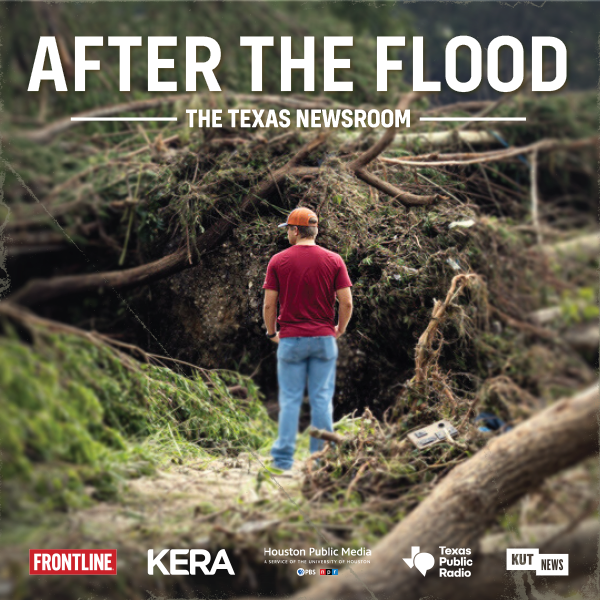
As we approach one year since deadly floods ravaged the Texas Hill Country, the podcast “After the Flood” is telling the stories of the people impacted most. Episode 2 explores why the Hill Country is so vulnerable to flooding.
Canada and Mexico have won their first knockout games of this year’s World Cup. Now the United States has the chance to do the same. We hear from former U.S Men’s National Team player Gyasi Zardes.
And: another tale from the Accent Unmuted storytelling event.
Austin Signal is made possible by listeners like you. You can support our work by making a donation at supportthispodcast.org
The full transcript of this episode of Austin Signal is available on the KUT & KUTX Studio website. The transcript is also available as subtitles or captions on some podcast apps.
Jerry Quijano [00:00:08] The Austin School District is postponing most of its school boundary realignment changes for an additional year. It’s not the first time AISD has tried realigning attendance zones, and it’s not the first the plan has been pushed back. Where things stand now. And as we approach one year since deadly floods ravaged the Texas Hill Country, the podcast After the Flood is telling the stories of the people impacted most. We’ve got more about that coming up on today’s show.
KUT Announcer: Laurie Gallardo [00:00:34] The Austin Signal is a production of KUT News, posted by Jerry Quijano.
Jerry Quijano [00:00:40] Canada and Mexico have won their first knockout games of this year’s World Cup. Now the United States has the chance to do the same. We’re going to hear from a former U.S. Men’s national team player, plus another tale from the Accent Unmuted storytelling event. Those stories and more coming up next on Austin Signal. Howdy out there. You are listening to Austin Signal. I’m your host Jerry Quijano. It is Wednesday, the first day of July. We are halfway through 2026. Thank you for spending part of it. We’re here with community-powered public radio. This is KUT News. A plan to realign the Austin Independent School District’s campus boundaries has been postponed until at least the 2028-2029 school year. This move comes after parents raise concerns about the plan Now the district is holding meetings to gather more feedback from the public. Greta Diaz-Gonzalez-Vasquez is KUT’s education reporter. She is here with us to explain. Hi Greta. Hey Jerry. So lots going on with AISD, whether it be the budget or campuses closing. So let’s talk a little bit about this alignment zone or these plans to realign attendance zones. Why was the district wanting to do this?
Greta Diaz Gonzalez Vasquez [00:02:00] Yeah, so attendance zones is where… I feel like we need to start there. It’s very basic, yeah. Where families are assigned to go to school based on where they live, and then also something that will come up is feeder patterns, which is where kids go to school, where elementaries are assigned, which middle school they go to, and then which high school they got to. So it’s very common for school districts to change boundaries after school closures, and AISD is closing schools. And it’s 10 schools that that changes where kids are going to school and some schools might be over enrolled, some might be under enrolled. And so the district is saying that this realignment will help, one, make sure schools are properly enrolled, also that there’s a baseline of programs and services for all schools and it will help stabilize the budget, and that it will be less disruptive for some of the students. An example is Keeling Middle School. Right now it receives students from nine elementary schools, and then it feeds into five high schools.
Jerry Quijano [00:03:02] Oh, okay.
Greta Diaz Gonzalez Vasquez [00:03:03] The plan, one of the plans, there’s two different plans, but one of the plan is for Keeling to receive kids from seven elementary schools and then split only into three high schools. So you would be together with your cohort. You, you keep a cohort together.
Jerry Quijano [00:03:15] Yeah, you’re more likely to stay through elementary, through middle school, and high school together. Yeah, exactly. Okay, so you tell us a little bit about what this plan means for the district. What more does it mean for the students involved?
Greta Diaz Gonzalez Vasquez [00:03:25] Yeah, so for the students involved, of course, for some means going to different schools. As of now, like I mentioned, some schools would be over-enrolled, some would be under-enroll by quite a bit. And so they’re expecting to have no less than 225 students across the district in each school. Gotcha. And so that means that students will have more of a similar experience. Of course, there will be disruption because some of the schools will be receiving students from different neighborhoods. So, it’s… Yeah, it’s some changes for students for sure.
Jerry Quijano [00:03:56] Okay, so this plan has been postponed in part due to pushback from some parents. What have their concerns been?
Greta Diaz Gonzalez Vasquez [00:04:03] Yeah, AISD has been meeting with families and showing these two proposals. And what I’ve seen in those meetings and heard from parents is they want to protect the campus culture because, you know, you do create a culture in your neighborhood school. So they’re worried about like which families are coming in, who’s not going to be in here. Also, of course, if they are assigned to a different school, some families buy houses thinking of the school their kids are going to go to in the future or in that moment. So, that kind of disrupts family plans, of course. Some say that there’s been too much disruption in the last few years at AISD, even with closing schools, and that kids need stability. And they’re also questioning if their feedback is being heard or not.
Jerry Quijano [00:04:44] Well, there has been a lot going on with the school district, so much so that I forgot that this is not the first time that they had tried to realign and then delayed realignment. You reported that a plan was first talked about last year but then got pushed back. What happened then?
Greta Diaz Gonzalez Vasquez [00:04:57] Right. It was when they also announced they were closing schools and there would be a realignment plan. Then they decided to take three schools of that list and that realignment would happen the next year, which is this year. And now after actually 2,750 comments from the community, the superintendent sent an email to families last week and they said that they would push the dates, the timeframe and that it was to make better, this is a quote, better, more sustainable long-term decisions along with the community.
Jerry Quijano [00:05:26] OK, last question. A little more than a minute here. Moving forward, the plan is now divided into two phases. What are those two phases?
Greta Diaz Gonzalez Vasquez [00:05:33] Right, so the first phase will include the schools impacted by the school closures, so those that are taking in the students from the schools that closed. It will also include some schools that are over-enrolled and that would be using temporary classrooms and that they’re saying they can’t afford. And we don’t know which schools those are. And this is expected to be voted on September and put into effect next school year. So 2027-28. So not the one starting right now, but after. And then the second phase is the rest of the school and they said it could also include school closures, which is the lead right there but that’s how we yeah we will see what happens.
Jerry Quijano [00:06:11] Okay, well this has been a developing situation in many respects, and Greta Diaz-Gonzalez-Vasquez will continue following it. She is UT’s education reporter, and we’re going to have a link to her reporting in today’s show notes. Greta, thank you.
Greta Diaz Gonzalez Vasquez [00:06:24] Thank you, Jerry.
Jerry Quijano [00:06:32] Saturday is the one-year anniversary of the deadly flooding that tore through the Texas Hill Country on the 4th of July, killing more than 130 people. The Texas Newsroom and PBS Frontline are covering the disaster in a five-part podcast called After the Flood, hosted by Houston Public Media’s Dominic Anthony Walsh. In episode one, listeners met Matthew Childress from Houston, the father of a Camp Mystic counselor named Chloe, who was reported missing on July 4, 2025. In the second episode, which is out now, Matthew gets a phone call. Here’s a preview.
Dominic Anthony Walsh [00:07:09] On the evening of July 4th, and much of July 5th, he sat with other mystic parents, waiting, watching many of them reunite with their children, and on Saturday, July 5, around 6 p.m.
Matthew Childress [00:07:23] We were all kind of standing in a group and I felt my phone vibrate in my pocket and I pulled it out and I showed everyone that was sitting in front of me that it was a Kerrville number. So I went ahead and answered it. I turned away from them and said hello. I remember it was the gentleman who I believe was a sheriff’s officer. I don’t remember specifically what he said, but all I remember him saying was, Grimes Mortuary. And I collapsed, dropped my phone and started to wail. And all I remember is my wife telling me to grab my phone and my brother and sister who were there kind of helped to pick me up and kind of carry me out of there to get us in the car to go to the mortuary. You know, even in those moments, we were still hoping that perhaps it was a misidentification that it was possibly someone else. And I had to make the decision to identify her. And somehow I was lucid enough to be able to understand of if I somehow didn’t do it myself, that I would regret it. And so my wife and I went in, identified her. It was absolutely terrible. I wish that upon no man or woman. See my firstborn, my hero being in that state. But I’m glad that I did it, I’m glad my wife and I had the courage to identify her. And my poor brother and sister had to sit there and listen to us suffer as we reacted to that, which I will always forever thank them for their support to pull us through that terrible moment. But at the same time, as I had said goodbye to her. A week earlier and gave her 17 kisses. I went back in and gave here 17 kisses before we said goodbye. That’s how we said, goodbye, good night, every night.
Dominic Anthony Walsh [00:09:17] Matthew and Wendy made the long drive back to Houston.
Matthew Childress [00:09:21] So when we got home, it was tough to get back to her room. It was tough come into the house. Took me probably 15 minutes to get out of the car. So I was so terrified to come into house. Once we got to see my son and my in-laws, I told my wife we need to go upstairs and be in Chloe’s room, otherwise I would be afraid of going in there and I needed to go in there immediately. So. After a long sobbing on her bed and we started to kind of wander around and I believe maybe an hour or so later we were still just kind of wandering around going through her things and my wife had seen in her bathroom the sticker that said Isaiah 43 2 on it. That’s not something I’m familiar with and we had to look it up what it was.
Dominic Anthony Walsh [00:10:12] Isaiah chapter 43 verse 2, When you pass through the waters, I will be with you, and through the rivers they will not overwhelm you.
Jerry Quijano [00:10:25] You just heard a selection from After the Flood, a new podcast by the Texas Newsroom and PBS Frontline that covers last year’s deadly floods in the Texas Hill Country. Episode two is out now. We’re going to have a link in today’s show notes. And now some headlines from today. Austin Public Library is asking Austinites to vote on new community-submitted library designs in honor of the library’s 100th birthday. Folks can choose their favorite design in three different age categories. Voting is open through the end of the month. And we’re going to have a link in today’s podcast show notes. And the Texas Department of Public Safety is ramping up patrols over the July 4th weekend. It’s part of Operation Crash Reduction effort beginning tomorrow and running through the 5th. DPS Highway Patrol officers will be watching for speeding, impaired driving, and failing to comply with the state’s move over slow down law. During this enforcement period last year, DPS arrested nearly 300 people for DWI and issued just over 5,000 citations for speeding. No reason to do it. You can Uber, you can bike, you walk. Do not drive impaired. Be safe out there and be respectful of others, most importantly. This is Austin Signal and we have more show coming up for you after this break. Stay with us.
Nammy Sirur [00:12:00] You’re listening to Austin Signal. I’m Nami Surur, creator of the live storytelling event, Accent Unmuted. Ever been between a rock and a hard place? I mean, literally? Well, storyteller Babi Nagarajan tells the story of how ignoring a literal red flag got him in that situation.
Babi Nagarajan [00:12:19] It is a gorgeous day in Hawaii. The sun is beaming down on waves that cascade with a perfect cadence. And I, I’m ready to hit the beach. I am bounding down the shore, rental surfboard in hand, I get on the water, start paddling out, and to my dismay I notice the beach is very crowded. Turns out, I am not the only genius who had the idea to go… Surfing on this perfect day, but then out of the corner of my eye I see an untouched part of the ocean and it calls out to me It’s beautiful. Oh, yeah, and of course, I don’t notice this as much, but it’s also past a red flag On the shore can’t be that much of a big deal, right? It’s vacant Instinctively without even missing a beat. I turn my board towards the vacant part of ocean And once I’m there, angle my board back to the beach and wait for the perfect wave to catch. Nothing. A couple of bumps, mini waves, but not something strong enough to ride back to shore. At this point, I’m even more dismayed. My rental window is running out and I want to make the best of my time. So I figure the best course of action is to paddle back to the shore and to scout for good waves. So once again, I start paddling. Paddling. Paddling! Now, a little bit of context. In order to get the confidence I had to take on the solo mission, I had been surfing for around three years, all over the world, with lessons. And that’s what inspired me to go off and do this on my own. So I was feeling good about myself. Until I realized that the paddling wasn’t getting me anywhere. Something was wrong. I was caught between two swells of waves that were moving in sync. So regardless of how hard I paddled, how hard I kicked, I just wasn’t getting back to shore. So that’s what the red flags were there for. I thought that might be useful to remember, but it hit me like a brick. The gravity of the situation starts to get to me. I start getting nervous. Every fiber of my being wants to scream out loud. Am I gonna die here? Am I stuck here? Should I scream for help? Should I frantically wave around? But then I breathe. I need to keep my peace. It’s a beautiful day after all, it’s gorgeous. But I also need to get out of here. What I realize is that since the waves are pushing me back and forth in the same place, all I have to do is to take two steps forward. While being pushed one step back. But my paddling wasn’t enough, so what should I do? Aha, I realize I’m not in that deep. I’m probably closer to the ocean floor than I think, so maybe I could use the ocean floor to push me towards the shore while paddling at the same time. So I give it a shot. Bored in one hand, I descend. Find with my feet to see if there’s anything to push off of against and I find a rock, amazing, this might work. I push off as hard as I can, rise up in one fluid motion, and use the momentum to glide. I relax, get a few paddles in, in the meantime. But this is worth a shot, I try it again. Descend, find something with my feet, this time it’s just the ocean bed, it’s sand, but I push as hard I can. Rise back up again, and glide. And while I’m exhausted… I’m terrified. I keep telling myself to push. Until after a couple of repetitions. The ocean floor is shallow enough for me to rise up, grab my board, and walk back to shore. And let me tell you, it was the best walk I have ever taken! My God, I was exhausted, I tired, I scared, but at the end I was victorious and I decided to trade my rental surfboard back in for a beer. That was enough surfing for today. Now looking back, I realized why that vacant part of the ocean truly called out to me. More than just the secluded location and the ability to surf great waves. Between growing up in India, being very sheltered in a schooling system that emphasized memorization over mindsets, as well as an odd EHD diagnosis at a very young age, I felt like my life was a script that was written for me. Often times I felt like the opportunities to think independently, to think about creative solutions, to think outside the box, were limited to few. It was when I left for college that I found myself subconsciously just really seeking out opportunities to use my creative thinking, to be independent, to be out on my own. And despite this being truly a near-death experience with the danger of the swell, I am glad that happened because that proved something to myself. I learned that when the chips are down, and your luck has run out, I had what it takes to think on my feet. Turns out all you have to do when you’re struggling is to… And I guess it doesn’t help to avoid literal red flags, right? That’s probably a good survival instinct. Thank you.
Nammy Sirur [00:18:50] That was Babi Nagarajan, telling his story to a live audience at a recent Accent Unmuted in Studio 1A here at KUT. I’m Nami Sirur, this is Austin Signal.
Jerry Quijano [00:19:08] The U.S. Men’s national team won their World Cup group and begin the knockout stage of their tournament tonight at 7pm local time against Bosnia and Herzegovina. The U-S is hosting the World Cup for the first time since 1994, along with fellow hosts Mexico and Canada, who both emerged victorious in their round of 32 matchup. Soccer has seen an explosion in popularity since that 1994 World Cup, including the rise of Major league soccer. And on the latest episode of the Vamos Verde podcast, hosts Jimmy Moss and Juan Diego Garcia spoke with former U.S. Player Giasi Zardes about the team, the sport, and its future in this country. This conversation was recorded live at Casa Verde at Incahoots during a recent World Cup watch party.
Jimmy Maas [00:19:54] How much do you think back to like your time with the U.S. Men’s national team and the bonds you cemented during those times or maybe some of the grudges you bore during those times?
Gyasi Zardes [00:20:05] Yeah, so, man, I love representing our country, you know. It’s been a tremendous honor to play for the U.S. Men’s National Team. But even, I went to game one in Los Angeles, in my hometown, and the one thing I love, I looked around, I had my old teammate, Joe Corona, sitting a couple rows behind me. I walk up to get my son some food, guess who I run into, Josie Altidor, my old teammates. So things like this, we reminisced, and we wish we were on the field. We’re always gonna have that feeling, but at the same time. We understand our whole time while we were playing, we were supposed to inspire that next generation, and here go the next generation. So now these guys are continuing that legacy and inspiring the next-generation of players that are, I see little kids watching the World Cup game. Even at the actual games, I see kids enduring these moments with their families, things that’s gonna go a long way, and hopefully one day we get to see those younger kids when they step on the field and represent their country as well.
Juan Diego Garcia [00:21:02] Zardis likes what he’s seen so far from the U.S. Team. He talked about the different ways the team can hurt opponents, the depth off the bench, and the performance of some of the stars, but it’s not all about what the players contribute on the pitch.
Gyasi Zardes [00:21:15] I know behind the scenes when it comes to selecting a roster for a World Cup, there’s other factors. It’s not just what you do on the field, it’s what you off the field and also certain players that interact together. For example, Christian Rodin, in the locker room, incredible person. On the field? Incredible player. But you have guys like that within the locker to keep the team together. Yes, we’re winning games and we haven’t lost and I hope we don’t lose, but that Those kind of moments outside of the field plays a huge role onto the results. Getting stuck into tackles, battles on the field. Every little tackle, I’m watching the surrounding players and how they react to help their teammate. Are they fighting the other players or breaking up certain things being smart? And little details like that in a big tournament like this, you know, you can see how tight-knit this locker room is.
Jerry Quijano [00:22:07] That was former U.S. Men’s national team striker Gias Izarda speaking with Juan Diego Garcia and Jimmy Moss, the hosts of the Vamos Verde podcast. You can find a link to their full conversation in today’s podcast, Show Notes. That is it for today’s show. Thank you for being with us and tuning in. You can always find more of the stories that we’ve shared with you over at kut.org slash signal. Rene Chavez is our technical director, Alexandra Hart is our producer, Kristen Cabrera is our managing producer. I’m your host, Jerry Quijano, Austin Signal. We’ll be back at the same time tomorrow, and we’ll talk to you then. Have a great day.
This transcript was transcribed by AI, and lightly edited by a human. Accuracy may vary. This text may be revised in the future.