
 Listen

Matthew Childress and his wife, Wendie, learn that their daughter, Chloe, an 18-year-old counselor at Camp Mystic, is missing. And residents in Kerr County recount how they survived the grueling initial hours of the flood.
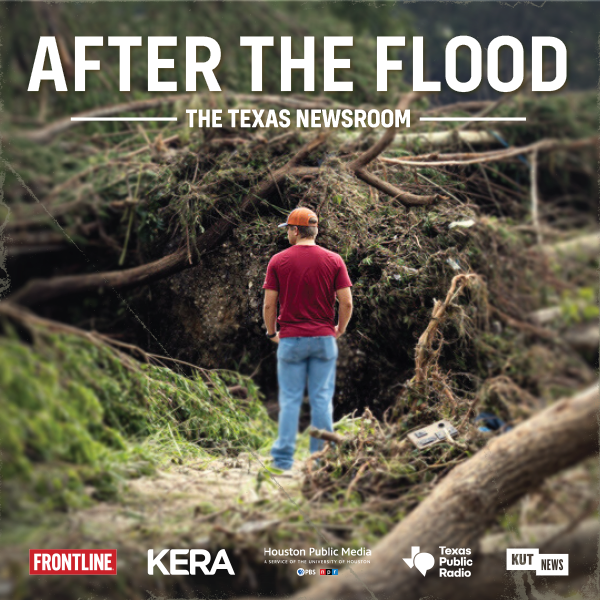
After the Flood is a collaboration of The Texas Newsroom and PBS’s Frontline.
The full transcript of this episode of After the Flood is available on the KUT & KUTX Studio website. The transcript is also available as subtitles or captions on some podcast apps.
Dominic Anthony Walsh: On the morning of July 4, 2025, an emergency dispatcher in the Texas Hill Country got a call.
911 operator: Kerr County 911, what’s the location of your emergency?
911 caller: Here at Camp Mystic in Hunt, Texas. We need search and rescue.
911 operator: Okay, what’s going on?
911 caller: We’re missing, we’re missing as many as 20 to 40 people.
Dominic Anthony Walsh: Hundreds of miles away in Houston, Matthew Childress was getting his day started.
Matthew Childress: Was ready for a non-work lazy Friday, and was coming down and starting to check emails, have coffee, et cetera.
Dominic Anthony Walsh: Matthew’s 18-year-old daughter, Chloe, had left home to be a counselor that summer at Camp Mystic. The all-girls camp is one of over a dozen popular summer camps in Kerr County.
Matthew Childress: And probably about 30 minutes later, my wife came down and said that she was fielding texts from friends and family about flooding that was happening in the Hill Country, and that we should be concerned.
Dominic Anthony Walsh: Camp Mystic is right on the banks of the Guadalupe River, and on July 4th, 2025, hundreds of campers were on site. There had been a flash flood overnight, which isn’t unusual in central Texas, but alarming images of the river surging over its banks started circulating around social media and the news. At home in Houston, Matthew’s wife, Wendy, kept trying to text and call Chloe, but she didn’t answer her phone.
That wasn’t necessarily cause for alarm. Camp Mystic did not allow campers or counselors to have phones, but Matthew and Wendy thought about just getting in their car and driving to Chloe.
Matthew Childress: So initially, I was skeptical, thinking that, yes, it may have flooded, but I’m sure everything is okay, and do we need to get in the car and actually drive for five hours?
So my fear was, is w- we would drive there, and then we’d be driving back.
Dominic Anthony Walsh: But the concerned text messages from friends and family members kept coming, and to Matthew, the urgency of the situation became clear.
Matthew Childress: So we quickly grabbed bags, threw basically overnight clothes, and also packed a small bag for my daughter, just in case she might need to come home with us.
Threw it all in the car, and shortly thereafter, we were on the road.
Dominic Anthony Walsh: Matthew aimed the car west on I-10. Along the way, Wendy tried reaching Chloe again. Still nothing. Then, after an hour on the road, the phone rang. On the line was a representative from Camp Mystic.
Matthew Childress: She called to let us know that she was calling all families that had children that were unaccounted for. And she let us know that she had just called all the campers’ parents and that we were the final people to be called because we were the counselors’ parents, to let us know that Chloe was unaccounted for.
Clearly, our anxiety went through the roof. I was definitely driving faster than I probably should have been driving on the freeway, and I believe it was raining off and on. Um, my sweet wife was telling me to slow down and be careful along the way, but all I could do was get there as quickly as I could to try to contribute something to, to help and find the girls.
Dominic Anthony Walsh: You’re listening to After the Flood, a podcast from the Texas Newsroom and PBS’s Frontline. I’m Dominic Anthony Walsh. I’ll be your host for this five-episode series. My day job, though, is being a reporter at Houston Public Media, the local NPR station. I mostly cover city government, but this time last year, that changed dramatically.
Reporter: Heartbreaking numbers coming out of Central Texas.
This has just been an unprecedented historical flooding event there. Now the enormity of the disaster is nearly impossible to bear.
Dominic Anthony Walsh: Starting on July 4th, 2025, floodwaters ripped through this part of the state, catching people by surprise. More than 130 people died, many of them children.
The vast majority of those deaths, 119, happened in Kerr County. For people who lived through the disaster and those who lost friends and family, the devastation was unimaginable.
Ashlee Willis: Everything is gone.
Dominic Anthony Walsh: And that was just the beginning. I went to Kerr County to cover the flood. I spoke with residents and tourists.
I visited places destroyed by the flooding and tried to make sense of it all for our listeners. And in the 12 months since, my colleagues and I have kept coming back. Throughout our reporting, we’ve met dozens of people kind enough to share their stories. They told us about that day, the early morning chaos as the waters rose.
Bob Canales: I remember seeing him standing by that tree you’re looking at. That was the last time I saw that fine young man with his family.
Dominic Anthony Walsh: But mostly, their stories are about all that came afterwards: the shock, the long slog through recovery, the struggles they faced, or still facing today, as they rebuild their lives.
This podcast is about their stories and about the questions they have, that we all have. Why did this happen? How could this happen with almost no warning? And could it happen again?
Louis Amestoy: The argument is, is this unprecedented? Is this something that we’ve seen before? Well, the truth of the matter is, it’s kind of in between.
Dominic Anthony Walsh: Before we continue, a quick note. This podcast will be tough to hear at times. These are extremely difficult stories dealing with death and trauma, so please take care while listening In this episode, we’re gonna cover what happened on July 4th. But before we get into that, you need to know a little about this part of the state.
The Hill Country is what it sounds like, rolling hills that stretch hundreds of miles west of San Antonio and Austin. Just outside those bustling Central Texas cities, the Hill Country is almost all nature, limestone cliffs and canyons, winding rivers and creeks, Texas live oak and bald cypress trees, no dense urban spaces in sight.
The people follow the water, specifically the Guadalupe River, which starts here and runs all the way to the Gulf Coast In Kerr County, the river flows west to east with a roughly 15-mile stretch running through the small communities of Hunt, Ingram, and right through the city of Kerrville. Hunt and Ingram are tiny, with only a couple thousand residents between them.
Half of Kerr County’s total population, about 25,000 people, live in Kerrville. Throughout the early morning hours of July 4th, people up and down this stretch of the Guadalupe experienced devastating flooding, but not all at the exact same time. The flooding started in Hunt, which is home to many popular summer camps, including Camp Mystic, then surged down the river toward Kerrville.
Between Hunt and Ingram sits the neighborhood of Bumblebee Hills. It’s a community of about 30 single-family homes, which actually makes it one of the denser areas along the river. July 4th should have been a day-long party there last year: river tubing, backyard grills, fireworks. The day before, July 3rd, Miles Maruyama was getting ready.
He’d set up a bouncy house in his backyard in Bumblebee Hills for his grandkids.
Miles Murayama: Third of July was a beautiful evening. It was beautiful. Nice. You know, sunset was nice. Everything was real calm.
Dominic Anthony Walsh: Up the hill, his neighbor, Ramiro Rodriguez, who everyone calls Ram, was planning a more low-key celebration.
Ramiro Rodriguez: Remember I was trying to gather something, what we can do, maybe make some hamburgers. I remember seeing my, my coworker at HEB, and, uh, he was like, “We’re gonna have seven inches of rain, so you better watch out.” And I was like, “Well, we need it.”
Dominic Anthony Walsh: It had been a really dry summer. Across the street from Ram’s house, Lilia and Joe Herrera were taking it easy since Joe had been sick, an unexpected twist that derailed their plans.
If not for that, their house would’ve been full.
Joe Herrera: Well, we had planned to have about maybe 10 people come in and visit us.
Lilia Herrera: It was, uh-
Joe Herrera: For the Fourth of July … Fourth of
Lilia Herrera: July.
Joe Herrera: They were coming on the 3rd and help us get dinner, lunch, and stuff ready, and more people were coming on the 4th. Yeah. But on Tuesday that week before, I had COVID, so I canceled the plans.
Thank God I canceled the plans
Dominic Anthony Walsh: On the night of July 3rd, Joe sat by his front window and watched as a stream of headlights lit up the road along the Guadalupe River.
Joe Herrera: Cars pulling trailers, RVs, and SUVs, uh, coming into town.
Dominic Anthony Walsh: To Joe, it made sense. This wasn’t just any Independence Day. This year it fell on a Friday.
Folks were coming to this slice of paradise to celebrate a three-day holiday weekend.
Joe Herrera: This is gonna be a busy 4th of July. My God, look at all this, look at all this traffic.
Dominic Anthony Walsh: Then it began to rain. What you’re about to hear is what happened to Joe, Lilia, Miles, and Ram as the waters rose. Their homes are about 500 feet from the river’s edge, and form sort of a triangle.
Ram’s house sits up higher than the others on a small hill. Miles lives down the hill, and across the street are Lilia and Joe, who live closest to the riverbank. That night, as July 3rd became July 4th, Joe watched the headlights from the vacation weekend traffic.
Joe Herrera: I was up at 1:00 in the morning, and I heard the rain coming.
And I heard it coming down hard.
Dominic Anthony Walsh: It wasn’t unusual for Joe to be up at 1:00 AM. Not only was he fighting off COVID, but Joe also has Parkinson’s, something he says can make it difficult to fall asleep.
Joe Herrera: I looked at my rain gauge. It was 10 and a half inches, and that’s 45 minutes. That’s a lot of rain.
Something’s going on here.
Dominic Anthony Walsh: Around this same time, across the street, Miles got out of bed.
Miles Murayama: I woke up at about 1:00 o’clock You know, it was, it was, it was just storming, raining, you know, which w- we’ve been through it before
Dominic Anthony Walsh: It was coming down pretty hard, but at that point, Miles wasn’t too concerned. Like many people in Kerr County, he knew rain was in the forecast overnight, but nothing Miles heard about the storm before going to bed gave him cause for alarm, and he didn’t know the National Weather Service issued a flash flood warning for the area at 1:14 AM.
Miles was focused on his grandson, the one he’d set up the bouncy house for earlier. He woke up nervous about the loud weather, the rumbles of thunder, the downpour pummeling the roof.
Miles Murayama: So I stayed up with my grandson, I don’t know, maybe about a hour, a little more. Then I got sleepy, and he got sleepy, so we went back to sleep.
Dominic Anthony Walsh: And up the hill, Ram was awake, too, along with his son.
Ramiro Rodriguez: It was real early, uh, really, really early. I remember the, I think around 2:00, that’s when the, the power went out.
Dominic Anthony Walsh: Ram tried to fall back asleep, but his son was terrified of the dark, so he stayed up with him.
Ramiro Rodriguez: Uh, I could hear the thunder. I could hear the rain pouring, and then, uh, out of nowhere, hear the dogs barking.
I have two dogs. I could hear them just barking crazy.
Dominic Anthony Walsh: Then he heard banging on the front door. When Ram opened it, he found a family who’d been staying at a vacation rental down the hill, a house right on the banks of the Guadalupe River.
Ramiro Rodriguez: They were just terrified and shaken up, and they were telling me that the, the neighborhood was getting flooded, s- so I was like, “What?”
And I looked down, and yeah, sure enough, the water was rising in the area.
Dominic Anthony Walsh: He’d never seen anything like this. Around 3:00 AM, Miles’ wife got a call from Joe.
Miles Murayama: My neighbor across the street, Joe and Lilia Herrera.
Dominic Anthony Walsh: They needed help.
Miles Murayama: I woke up, got my flashlight, you know, tried to head to Joe’s house. As I got to the front door, there was water leaking in my house.
When I opened up the door, the water came in. The water was right above my kneecap.
Dominic Anthony Walsh: As water rushed in, Miles trudged outside, where he could barely comprehend what was happening. He says he was in awe, shocked to see the Guadalupe River at his house, which is normally about a football field away from the river’s edge.
In the beam of his flashlight, he saw water raging through his neighborhood. Across the street, Miles saw Lilia and Joe’s house, closer to the river, starting to flood.
Miles Murayama: I tried to cut across to Joe’s house, and I didn’t make it too far, and the, the water got ahold of me and knocked me down. It took me to my backyard.
Once I got to my backyard, I knew I had to get up and seek cover, so I got up, and I took off, and I seek shelter behind my house.
Dominic Anthony Walsh: The river was surging. Joe and Lilia heard what they describe as three big waves, an immense amount of water crashing.
Joe Herrera: Terrible sight. Three bigger
Lilia Herrera: waves. That’s when, that’s when Joe says, “We gotta get out of here.”
Dominic Anthony Walsh: Joe told his wife to climb up to the attic. Because of his Parkinson’s, he didn’t think he’d be able to follow her up.
Lilia Herrera: You, everybody’s saving yourself, Marnie. He, he said, “Save yourself. Don’t save me.” And that’s when we heard Ram.
Dominic Anthony Walsh: From his house on higher ground, Ram looked downhill and realized Joe and Lilia were in trouble.
He went to help.
Ramiro Rodriguez: It was real fast. Like, I couldn’t even imagine what was going on through my head.
Dominic Anthony Walsh: Ram tied a strap around Joe’s waist and pulled Joe out of the water towards higher ground. Lilia held on, too.
Ramiro Rodriguez: And then I remember walking up the hill. It was just a quick, quick reaction, honestly. It couldn’t, it was an impulse, impulsive moment, you know?
Dominic Anthony Walsh: Miles struggled through the water to join Ram, Joe, and Lilia. From Ram’s house, they all watched as the Guadalupe continued to rise below them.
Miles Murayama: I couldn’t believe that the river had crested this high, and the river was in, in, in our neighborhood.
911 operator: Clark County 911. What’s the location of your emergency?
Dominic Anthony Walsh: At about 4:40 AM, emergency calls from Bumble Bee Hills residents started rolling into the county’s dispatch center.
911 operator: We’re working on getting those that are affected by the flood rescued. We do have water rescue headed to Hunt and Ingram, trying to help.
Right now- Okay … the best thing that you can do is get as high of ground you, possible on top of the roof of the house, vehicle, attic.
911 caller: Okay. We’ll, we’ll do that.
Dominic Anthony Walsh: The water continued rising.
911 caller: It’s up to my waist in the house.
911 operator: Yes, ma’am. I understand. We-
911 caller: Windows are open. Yeah.
911 operator: We are working on trying to get everybody to y’all.
We have water rescues. And rising. Subdivision, Bumble Bee Hills Subdivision. Um- There is an elderly woman up on her roof.
911 caller: Bumble,
911 operator: okay.
911 caller: We’ll let them know. Her mother has- We’ll let them know.
911 operator: Thank- We’ve gotten
911 caller: multiple calls from people off of Bumble Bee. We’ll let them know.
911 operator: Well, please hurry. She’s elderly, and I don’t know how much longer she can hang on.
The water’s getting closer to her on her roof.
Dominic Anthony Walsh: On the morning of July 4th, 2025, up to 11 inches of water fell in just a few hours over the Texas Hill Country. In some areas, the Guadalupe River rose as much as 38 feet above its banks, a record high.
This is After the Flood. Coming up after the break, we follow the floodwaters downriver, and we’ll reconnect with Matthew and Wendy Childress. We’ll be right back
I’m Dominic Anthony Walsh, and this is After the Flood, episode one, The Day Of. We just followed Joe, Lilia, Ram, and Miles as they escaped the rising water in their neighborhood, Bumblebee Hills. The water then headed downriver toward Kerrville. Especially vulnerable were riverside RV parks and campsites along the way, and there were a lot of them, including Blue Oak RV Park.
Before the flood, Blue Oak looked like many of the small parks scattered across the Hill Country. Gravel roads wound between rows of campers and travel trailers. There were fire pits and folding chairs. Some campers had just arrived at Blue Oak for the long holiday weekend, but Jake Richards and his wife had been staying at the park at that point for about three months.
Jake Richards: This turned into home really quickly. But yeah, it’s beautiful out here.
Dominic Anthony Walsh: Jake and his wife were two of the 28 campers staying at Blue Oak that day. All their RVs and travel trailers were lined up along the river’s banks and set on a small island nestled midstream. Lorena Guillen and Bob Canales, the couple that owns the park, were up early the morning of July 4th, and started wondering if all the rain would be dangerous for their campers.
Lorena reached out to the sheriff’s non-emergency line at 2:08 AM, about an hour after the National Weather Service issued that flood alert, but before officials were giving residents clear directives.
911 caller: Kerr County Sheriff’s Office.
Lorena Guillen: I’m here at the Blue Oak RV Park, and I have a few campers staying right next to the ri- the Guadalupe.
How bad is it, uh, the levels of the Guadalupe right now?
911 caller: We, we don’t have, we don’t have that information.
Lorena Guillen: Okay. But, uh, is it flooding, or do you know anything about it? ‘Cause I need to see if I need to start evacuating people or not. No, I’m not,
911 caller: I’m not even sure if it’s flooding.
Dominic Anthony Walsh: A call from someone in the park just two and a half hours later at 4:30 AM paints a very different picture.
911 operator: 911, what’s the location of your emergency?
Lilia Herrera: I don’t know. I need, um, rescue I think. I’m at the Blue Oak RV
911 operator: Park. I have a man screaming for help, “Help, help us.”
Dominic Anthony Walsh: By then, Bob Canales was scrambling to start evacuations.
Bob Canales: We jumped in and started knocking on doors to all the campers, telling them, “Hey, you gotta get out.
There’s a tremendous flood, flash flood, uh, warning and hazard coming.”
Dominic Anthony Walsh: Jake Richards was awake in his RV and heard the commotion.
Jake Richards: It was mostly, like, screaming that their homes were being swept away and everything. Um, so quickly, like, the water was up to the bottom level already, like, starting to sweep the RVs away from the bottom level.
So I woke my wife up, um, as soon as I saw what was happening outside. Uh, we, we got out of our RV in about two minutes, I think, and, uh, the water was already kind of up to the wheels.
Dominic Anthony Walsh: He grabbed a few shirts and a pair of shorts. His wife, Julia, a musician, grabbed her guitars. The couple had just enough time to get their car to higher ground.
Then they could only watch as the rising water swallowed their RV, carrying it down the river, along with houses and cabins.
Jake Richards: There was a thought there for a moment where it’s like, “Okay, we’ll save the homes and stuff that are up here,” ’cause nobody expected it to be as, as devastating as it was, and that hope lasted about 60 seconds.
Dominic Anthony Walsh: As campers hurried uphill away from the rising waters, RV park owner Bob Canales waded in the opposite direction. He headed towards the park’s small river island, where a family of four was stranded. Bob remembered the couple, their two young sons, and family dog checking in the previous evening just hours earlier.
Now, though, Bob saw the river raging around them as he struggled to get closer.
Bob Canales: It was dark. Only had a flashlight in one hand, and, uh, you’re already knee-deep in water, and they were even deeper on the other side.
Dominic Anthony Walsh: The father was clinging onto his young boys. Bob tried to convince him to throw him the baby that was in his arms.
He wouldn’t.
Bob Canales: And I understand why he didn’t do it, ’cause what if the baby didn’t make it, or what if I didn’t get the ba- So instinctively, I stepped off the s- sidewalk in, uh, in an attempt to help him, but the water was too powerful.
Dominic Anthony Walsh: The current swept Bob nearly 100 feet downstream before he grabbed hold of a retaining wall at the edge of the campground.
He pulled himself up and staggered through the dark flood waters, but the family was gone.
Bob Canales: I remember seeing them standing by that tree you’re looking at there with the lights on, and, uh, that was the last time I saw that fine y- young man with his f- family.
Dominic Anthony Walsh: That young man was John Burgess of Liberty, Texas. He and his wife, Julia Anderson Burgess, and their two sons, ages five and twenty-one months, died that day
Despite some very close calls, the other campers at Blue Oak RV Park that morning survived. But at an RV park just across the road, a staggering 37 people were killed. Jake Richards counts himself lucky. More than anything, he remembers how fast it all happened. At one point, the Guadalupe was rising about two feet per minute.
Jake Richards: The screaming for people who are losing their stuff turned into screaming for people who are fighting for their lives at that point. So you start to hear just like different screams. These like blood curdling screams of, of families getting washed away from upstream. You get like kids and everything, and then it just stops, and that’s the most haunting sound in the world, is that silence
Dominic Anthony Walsh: From 3:00 to 5:00 AM, emergency calls poured into the county’s dispatch center as the wall of water moved toward Kerrville. Do
Speaker 14: you need police, fire, or EMS?
911 caller: I need everything, sir. My house is so flooded. The
Dominic Anthony Walsh: calls paint a grim picture, hundreds of people trapped along the river, unable to get to higher ground.
911 caller: We’re up on the second floor now. My, uh, house is underwater.
Dominic Anthony Walsh: On the morning of July 4th, the sun rose on Kerr County at 6:40 AM, and residents got the full picture of what the flood had done. At the Blue Oak RV Park, formerly grassy campsites were now unrecognizable. Trucks, cars, and RVs were wedged into brush or nowhere to be seen. That view extended all along the Guadalupe River.
Twisted trees, debris everywhere, toys and clothes strewn across the soggy ground. Upriver in Bumblebee Hills, Joe and Lilia Herrera took in the devastation around their home.
Joe Herrera: Wow,
Lilia Herrera: it was just- Yeah. We came to the house and we’re like, “Oh my God.”
Joe Herrera: Oh, God. It’s all the mud in here, and-
Lilia Herrera: Stunk so bad … I mean,
Joe Herrera: we looked across, and the, the fence was gone, and across the river and all the trees, and it
Lilia Herrera: was- It was, uh, something you’ll never forget.
Dominic Anthony Walsh: Miles Maruyama was there, too, and noticed one of his neighbors and her family on the roof of their home. He’s not sure, but it’s likely she was the older woman who was the subject of that 911 call we heard earlier.
Miles Murayama: So once we made sure they were safe, we continued into the neighborhood back here.
Dominic Anthony Walsh: In the daylight, he realized his cars were missing from the driveway.
They had been swept down the street and onto a fence. Volunteer firefighters arrived from Harper, a town about 20 miles away, and they helped Miles evacuate some of his neighbors. Despite several white-knuckle situations, miraculously, no one in Bumblebee Hills was swept away, but now they needed somewhere to go.
Miles Murayama: So the evacuation process was to take them to Ingram Elementary School. That’s where everything was set up.
Dominic Anthony Walsh: The school is about 10 minutes away from the neighborhood, and it would serve as a makeshift supply depot and reunification site for the next few days.
Miles Murayama: When they got out, you know, we started talking, you know, and everybody’s mind is just racing, you know, still like, “Whoa, we can’t believe what just happened.”
Dominic Anthony Walsh: Early news of the missing and the dead began to spread, and Miles started asking a question he still asks himself.
Miles Murayama: Why? Why? Why? Why 4th of July, wee hours in the morning? Why couldn’t it be 4th of July during daylight where people would have a chance maybe?
Dominic Anthony Walsh: After a Camp Mystic representative had called to tell them their daughter Chloe was missing, Matthew and Wendy Childress arrived in Kerr County sometime around 1 or 2 o’clock.
They immediately headed to Ingram Elementary, the reunification site Miles Maruyama had visited earlier that morning.
Matthew Childress: During that whole timeframe, I was still in denial that this was something that was actually real happening to us.
Dominic Anthony Walsh: Matthew kept thinking about how strong his daughter was. She was an athlete.
He called her The Machine.
Matthew Childress: And I had every confidence that she had found a way to survive, and telling myself that she’s hanging onto a tree, you know, taking care of some camper somewhere, and she hasn’t just, she just hasn’t been found yet. And so all I could do was keep my hopes up as high as I could, um, that she was fine.
Dominic Anthony Walsh: Matthew and Wendy waited for hours.
Matthew Childress: As that day progressed, more and more families would arrive, um, into the gym, all folks waiting on news for when their children would arrive, and more and more information would seep out to our friends that were there that our daughter was unaccounted for. So God bless them, there were lots of, you know, parents giving us, you know, uncomfortable kind of hugs and, you know, hopeful wishes that Chloe would be found.
Dominic Anthony Walsh: He was tense but still optimistic. Then after 4:00 PM, the first small group of campers arrived at the reunification site. Chloe wasn’t with them.
Matthew Childress: And it really struck me hard in my gut, in my belly, of the horror and terror that may be laying ahead for us, that I may never see her again.
Dominic Anthony Walsh: By the end of the day, Texas Governor Greg Abbott was in Kerr County.
Greg Abbott: So thank you everybody for taking time to
Speaker 16: be here for us to update a nation that really wants to find out what’s going on and the responses taking place here in center part of Texas.
Dominic Anthony Walsh: By now, over 12 hours had passed since the height of the flooding, and officials didn’t have much concrete information to share.
Press conference: I want to tell y’all that we will be working around the clock 24/7 till every person is found. Uh, what I can confirm at this point, there are about 24 fatalities. We’re not gonna be giving any names out at this time. We’re still notifying next of kin.
Dominic Anthony Walsh: The small towns of Kerr County were under a national spotlight.
It was the top story for anyone who turned on the evening news on July 4th.
Reporter: Heartbreaking numbers coming out of central Texas. Now
Speaker 6: the enormity of the disaster is nearly impossible to bear.
Dominic Anthony Walsh: Residents were reeling as emergency responders took over the area, homes destroyed, loved ones missing, and reporters were starting to ask questions.
Reporter: Is Camp Mystic the only camp that’s under this sort of duress? I mean,
I know- What’s the threshold to, to send out a, an alert to people to get out of their homes?
Do you trust the wea- the National Weather service?
Greg Abbott: Listen, it’s not a matter of trusting or-
Dominic Anthony Walsh: But for Matthew and Wendy Childress, there was only one question they cared about: where was their daughter, Chloe?
Matthew Childress: All the parents slowly departed because they picked up their children, and all the folks that were left were the parents of the unaccounted for children. Through that evening, we probably laid down for maybe an hour and a half, two hours trying to close our eyes. But I don’t remember if I ever actually dozed off, but I remember staring at the ceiling mostly because all I could think about was Chloe.
But I also began to get so concerned that I was going to receive phone calls, because receiving a phone call meant that bad news was happening
Dominic Anthony Walsh: Our story continues in episode two of After the Flood, which will be available on July 1st wherever you get your podcasts. I’m Dominic Anthony Walsh Coming up next time on After the Flood
Matthew Childress: I felt my phone vibrate in my pocket, and I pulled it out and I showed everyone that was sitting in front of me that it was a Kerrville number.
Dominic Anthony Walsh: And we’ll take our first step into the days after the flood, when responders were scrambling and questions were swirling.
Emily Foxhall: County officials really spend all day trying to figure out what happened at Camp Mystic, which, you know, is just kind of illustrative of the chaos of a disaster of this scale.
Dominic Anthony Walsh: This episode was written by me, Sarah Grunau, Lucio Vasquez and Rachel Osier Lindley. Our editors were Rachel Osier Lindley and Elizabeth McQueen. Ana Campbell is our executive producer, and Elizabeth McQueen is our producer. Our editors at FRONTLINE are Erin Texeira and Mia Zuckerkandel . Our music is by Rene Chavez and APM and our audio producers are Casey Cheek, Jake Perlman and Matt Largey. Our multimedia editor is Deborah Cannon and Michael Minasi is our multimedia producer. Our fact-checker is Ena Alvarado, and our attorney is Thomas Leatherbury. Erin Geisler oversees our marketing, and our cover was designed by Maile Carballo. Corrie MacLaggan is the executive editor of The Texas Newsroom. Special thanks to Lauren McGaughy. The Texas Newsroom is a collaboration among NPR and the public radio stations in the state, including Houston Public Media, KUT in Austin, Texas Public Radio in San Antonio and KERA in North Texas. This project received editorial and financial support from FRONTLINE’s Local Journalism Initiative, which is funded by the John S. and James L. Knight Foundation.
This transcript was transcribed by AI, and lightly edited by a human. Accuracy may vary. This text may be revised in the future.