
 Listen

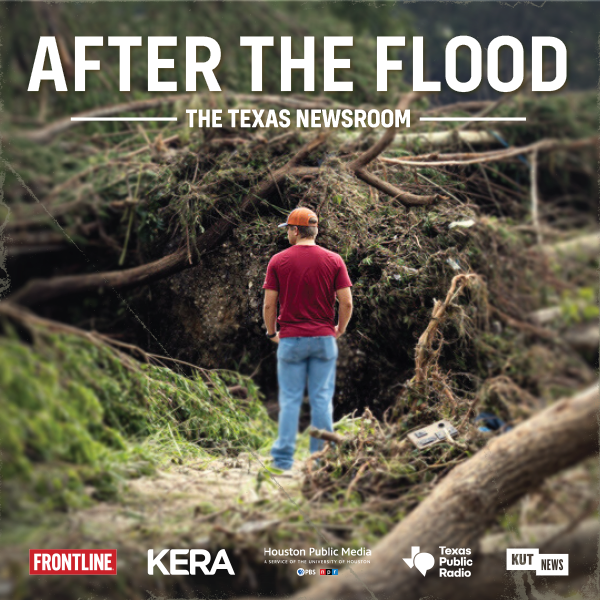
The onslaught of rain across Central Texas and other swaths of the state this week brings reminders of last summer’s floods. More than 100 people died, including nine people in the Sandy Creek neighborhood, where over 100 homes were damaged or destroyed. More about their community’s resilience in the face of tragedy.
Olamaie, one of the city’s first Michelin-starred restaurants, is shutting down this week after a dozen years in business — and it’s not the only award-winning Austin favorite that’s closing for good. We’ll talk about the difficulties and future of Austin’s eateries.
Plenty of free Austin music is happening this week with the return of Hot Summer Nights.
Austin Signal is made possible by listeners like you. You can support our work by making a donation at supportthispodcast.org
The full transcript of this episode of Austin Signal is available on the KUT & KUTX Studio website. The transcript is also available as subtitles or captions on some podcast apps.
Jerry Quijano [00:00:08] The onslaught of rain across central Texas and other swaths of the state this week is causing reminders of the floods of last summer. More than 100 people died, including nine people in the Sandy Creek neighborhood in Travis County, where over 100 homes were damaged or destroyed. We’re going to have more about the community’s resilience in the face of their tragedy. That’s coming up on today’s show.
KUT Announcer: Laurie Gallardo [00:00:29] The Austin Signal is a production of KUT News, hosted by Jerry Quijano.
Jerry Quijano [00:00:34] And the popular restaurant Olamay is shutting down this week after a dozen years in business, and it’s not the only award-winning Austin favorite that’s closing for good this weekend. We’re going to talk about the difficulties and future of Austin’s eateries, plus plenty of free Austin music is on deck this week with the return of hot summer nights. We’ve got plenty more about those stories coming up next. It’s right here on Austin Signal. Howdy out there, this is Austin Signal. I’m your host, Jerry Keconal. It is Wednesday, July 15th. Thank you for spending part of the day here with us. On July 5th of last summer, one day after the deadly floods in Kerr County, another flood hit the community of Sandy Creek 100 miles away right here in Travis County. Nine people died and over 100 homes were damaged or destroyed. Ashley Willis and her mother Brandy Gerstner lost everything in that flood and didn’t get the help they expected in the direct aftermath. In the months that have followed, they’ve discovered what many disaster victims confront, just how complicated the recovery process can be. KUT reporter Kaylee Hunt has been following Ashley and Brandy for the last year and tells their story in this excerpt from the latest episode of the After the Flood podcast.
Kailey Hunt [00:01:58] The night of July 4th, Ashley and her friends were partying at her pool. Ashley had heard about the flooding in Kerr County.
Ashley [00:02:05] But I didn’t think anything of that because as far as our safety here, our waterway is not connected to there.
Kailey Hunt [00:02:10] Ashley’s right, Big Sandy Creek isn’t connected to the Guadalupe River that runs through Kerr County. It’s a tributary that flows into Lake Travis, a dammed part of the Colorado River. However, the same weather system that caused the rain in Kerr County also caused the rain in Sandy Creek. It had been raining that July 4th, and Kerr county had just flooded, but Ashley said she and her friends weren’t worried. They went to bed around 1230 the morning of July 5th. Two hours later. Ashley woke up to her friends screaming and banging on her door. And then I opened the door and I was just like.
Ashley [00:02:47] I don’t even know how to explain it. It’s, I mean, it was biblical looking. Like it just, it made no sense what I was looking at. Like just like cars that I didn’t recognize and campers and like just people screaming and like I’m rushing people into the house who can get to the house before my patio goes.
Kailey Hunt [00:03:04] Ashley and five friends, two dogs, and two cats spent the night on top of her pool table.
Ashley [00:03:09] And just prayed that the water didn’t get taller than the ceiling.
Kailey Hunt [00:03:13] Ashley’s mom, Brandy, and her husband, Greg, made it to the family’s greenhouse on higher ground. But Brandy and Greg realized that a couple of Ashley’s friends were still trapped in the floodwaters. Greg, who had been trained as a ski patrol EMT, went to save them. Brandy was terrif-
Brandy [00:03:30] You can hear people screaming, there’s thunder, it’s lightning, it’s pouring down rain. And the sound of the rushing water, it’s just so many different noises. All, it was just terrifying, and you’re just in the dark, in the rain.
Kailey Hunt [00:03:48] Greg grabbed a tire and floated out to the car where Ashley’s friends were trapped. One by one, he brought them to the greenhouse where they rode out the storm. Eventually, the waters receded and the sun rose. Ashley documented the scene on TikTok.
Ashley [00:04:09] It’s all gone. Everything is gone. The pool, the brewery, the bar. Amina’s house is effed. This one is no better.
Kailey Hunt [00:04:25] Where trees used to be, there was just flat earth. There were cars and pieces of decking, parts of metal roofs and wooden fences, and what looked like a hot pink kid’s toy, all piled up in a heap with trees and mud. Outside Ashley’s house, a dirty water line showed flood water had reached nearly the top of her front door. Her aunt’s house across the creek was gone, and they didn’t know where she was. They would eventually find her with the help of a 911 operator. She was in an emergency room. Turns out, she had been swept miles downstream. In the houses directly across the creek from Asher Acres, six people died. Ashley and her group eventually made their way to their neighbor Ron’s house, which was located on a hill.
Ashley [00:05:15] And we all stayed on this porch because we were covered in gas, and sewer, septic, and oil, whatever else is in that water. Later to be noted, nothing I thought about the day of, poison ivy, which I had in places we will not discuss.
Kailey Hunt [00:05:32] The only road in and out of their part of the neighborhood had been overtaken by water from the creek. That meant they couldn’t get out and help couldn’t get in. On July 5th, a first responder tried to drive a vehicle through the rushing water, but got stuck. Later that day, first responders came on a boat and two of Ashley’s friends were medically evacuated. The rest, however, were told to stay put. And we’re like, hey, we totally get it. That’s fine. But then it was like another day. And I’m like, ugh. They waited and waited. They were dirty. They were hot. They were covered in muck. They had no power. They were running out of drinking water. They said they called 911 multiple times. But still, nobody came. Here’s Brandi.
Brandy [00:06:22] And still having heard the night before all about Kerrville, and it was just loud on the news, and everybody heard it. And I’m thinking, well, surely somebody’s going to be here for us. But there wasn’t. There was no one.
Kailey Hunt [00:06:38] On the afternoon of the 6th, Ashley and her group noticed the rushing water was slowing down. With no expectation that help was on the way, they found a narrow plank of wood and used it like a balance beam to cross the road. Once they got to the other side, Ashley said family members picked them up.
Ashley [00:06:56] It was a self-rescue, for sure.
Jerry Quijano [00:07:04] And Kaylee Hunt is joining us now. She’s our Williamson County reporter. Hi, Kaylee.
Kailey Hunt [00:07:08] Ta-Jerri.
Jerry Quijano [00:07:09] Thank you for being on the show with us. In the full podcast episode, which is out now, there’s a scene where you and the host Dominic Anthony Washer in the car driving Sandy Creek, and you point out where you went to high school in Leander. This flood happened not too far from your hometown. What has that been like reporting? I feel like a lot of times reporters are trying to find out about the community. What has it been like, reporting about a community that you know pretty well?
Kailey Hunt [00:07:31] Gosh, I mean, all this rain that we’re having today actually has taken me back a little bit to this time last year when we were out in the field reporting on this disaster. And yeah, I remember it feeling like a gut punch, waking up Saturday morning, July 5th last year, and seeing that people were missing, kids from my little brother’s high school. Were missing. It was very shocking. And so yeah, you know, I remember I wasn’t supposed to work that weekend, but it felt personal. And I knew that I was close by. I knew the area, so I had to get out there.
Jerry Quijano [00:08:19] Yeah, well, we are definitely thankful for your reporting and the reporting that you have done in the follow up you have followed Ashley and Brandy story over the past year. How has that been building that relationship that very intimate relationship after such a tragedy.
Kailey Hunt [00:08:34] Gosh, yeah, intimate is the right word, right, because, and honestly, kind of awkward at first too, right? When you, as journalists, you know, we approach and talk to people sometimes in these moments that are like the worst moments of these people’s lives. And yeah, you, know, being there from the beginning, it’s been really cool. And, you know, I say this too as a Daily News Reporter, there’s very few times that you get to follow sources so closely and so intimately over a year to see how their progress is going. And so, yeah, I feel really honored. And I really wanna thank Ashley and Brandi, their family and the whole Sandy Creek community, anyone that I’ve talked to over the past year, because I understand just how intimate and hard these stories are to share, but they’re important to share.
Jerry Quijano [00:09:32] Yeah, and you’ve been working really hard to to tell their story properly. What is it that you hope that people take away after they listen to the episode?
Kailey Hunt [00:09:39] Yeah, so you know, there was a lot of attention on the Kerr County floods. They’ve gotten a lot of national attention as they should. But you know I hope folks that listen to this episode of the podcast come away with an increased awareness to just all of the folks that were impacted by the disaster last year. And you know I also hope that this episode inspires people to think a little bit about how our society responds to these types of disasters and what types of changes could be made in the future.
Jerry Quijano [00:10:10] Well, you went back earlier this week to visit the community again as they continue that rebuilding process. What was that like?
Kailey Hunt [00:10:16] Yeah, I actually visited Sandy Creek on Monday, they were holding a community cookout. So that was a really big deal for them because prior to the flood, I mean, the area was just so wooded, so lushly forested, you know, a lot of people didn’t know their neighbors. So yeah, they’re in the throes of recovery still, only out of, there was more than hundred homes that were destroyed or damaged in the flood. Only two have been officially like rebuilt and are ready to go for their occupants. So yeah, they’re still full-fledged recovery mode, but I do want to say, you know, they’ve really found strength in their community.
Jerry Quijano [00:11:03] Alright, well you took your recorder out there, let’s take a little listen.
Kailey Hunt [00:11:06] Rain didn’t stop dozens of people in Sandy Creek from gathering at the Round Mountain School and Community Center on Monday evening.
Brandy [00:11:13] I want to thank each and every one of you for joining us at our first community cookout.
Kailey Hunt [00:11:19] That’s Sandy Creek resident Brandi Gerstner. She and her daughter Ashley Willis helped organize the gathering. It sought to celebrate the neighborhood’s newfound sense of community that had emerged as a result of last year’s flood. The event featured live music, games, and face painting. If you listen closely, you can hear the sound of children playing in the background as Willis addresses her neighbors.
Ashley [00:11:42] Let’s be honest, a year ago, none of us wanted to be here. We say in disaster recovery, it’s the crappiest club with the coolest people, but there is one thing that has come out of this, though, and it is this. It is our communi-
Kailey Hunt [00:11:56] That community has been a lifeline for many people in Sandy Creek, including Sue Winsett. Winset and her husband, like many others in the neighborhood, lost their home during last year’s flood. They’re still technically homeless, living out of an RV on their property as they try to navigate the challenges of long-term recovery after the flood.
Sue Winsett [00:12:16] All of the buildings except for one on our property were just washed away. So recovering has taken a long time, but getting to know our neighbors and doing it elbow to elbow and really celebrating, surviving and getting to know each other, it’s been a really beautiful thing.
Kailey Hunt [00:12:38] Winsett, Light Gerstner, and Willis is a part of the Sandy Creek Alliance, an advocacy group formed by neighbors in the months after the deadly flood. While recovery remains a priority for the Alliance, the group has also expanded its goals to include things such as improving the neighborhood’s water quality.
Ashley [00:12:55] The Sandy Creek Alliance exists to bring our community together.
Kailey Hunt [00:12:58] Here’s Willis again.
Ashley [00:12:59] We want to strengthen the community. We want get people communicating better. We want make our voices heard and make sure that when decisions are made that affect our community that we’re in the room.
Kailey Hunt [00:13:08] Of the 115 properties in Travis County affected by last year’s flood, so far only two have been fully rebuilt or repaired, officials say.
Jerry Quijano [00:13:19] Kaylee Hunt is the Williamson County reporter for KUT News, and she has been following the recovery of the Sandy Creek floods. Her reporting is featured on episode four of the podcast, After the Flood. That is a collaboration from the Texas Newsroom and PBS Frontline. That is out now wherever you get your podcasts. Kaylee, thank you for following these stories, and thank you coming in for today’s Reporter’s Notebook.
Kailey Hunt [00:13:42] Thank you, Jerry.
Jerry Quijano [00:13:43] Alright, thank you out there for spending part of your day with us. A reminder, we’re still under a flood watch until tomorrow night, so be weather aware. And keep it tuned in here to KUT News for the latest Austin Signal. We’ll be back after this break. This is Austin Signal, welcome back. Well you know Austin’s food and hospitality scene has ingrained itself in the city’s culture. And here at Austin Signal we’re going to talk about it in our new segment, On our plate. This is where we’re gonna take a little time to look at everything from industry workers, chefs, foodies, new and closing restaurants. In fact, it’s a bit sad that our first interview for On Our Plate is about the closing of Olamay, the Southern Fine Dining restaurant. The Michelin-starred Austin restaurant is shuttering July 19th, and it’s not the only award-winning eatery that’s closing down for good this week. For more, we’re talking with Matthew Odom. He is the restaurant critic and reporter at the Austin American Statesman. Welcome back, Matthew. Hey, good to see you. Good to see YOU. So for folks who might not have had the chance to get out and visit Olamay, tell us, what did it accomplish in its dozen years of business?
Nicole Klepado [00:14:54] You know, Olamay was a special restaurant. It was the first Southern restaurant to ever receive a Michelin star, which it earned two years ago when Michelin first came to Texas. Michael Fautaget is the chef-owner. He opened it, as you said, 12 years ago in 2014. It was a refined Southern restaurant and kind of dining there felt like being in somebody’s well-appointed Southern home, modern Southern home but with some old DNA to it. If you’re listeners that have been around Austin for a while. Might remember it was Mars before that, which was a Mediterranean restaurant. And people who have really been around a long time know that it was Oat Willie’s, a classic head shop, before that. And so Michael had gone on a tour through the South. He named the restaurant after a matriarchal name and his family that had been passed down through generations. He had worked in New York City at some fine dining restaurants and worked in Los Angeles at several esteemed restaurants. And this was his first concept.
Jerry Quijano [00:15:50] Yeah, Fodagy, as you mentioned, spent time in New York and LA, but in your reporting, he called Austin one of the more difficult markets to run a restaurant in. Why is that the case?
Nicole Klepado [00:15:59] Know, he makes a great point about the summers here, which he said the summers have always been really difficult. It sounds like in talking to restaurant owners, they’ve become more difficult, not just because it feels like it’s getting hotter here every summer, but it’s obviously getting more expensive to live in Austin. So, if you can afford to live in Central Austin, which I would say would be between Ben White and Research Boulevard, that’s kind of about the size of Manhattan, it costs a lot of money to live there. And if you can’t afford to life there, you can probably afford to not be here in the summertime. So July is horrible for Austin restaurants. August is also tough. But beyond that, you know, he says people don’t dine out late in this city. He says an 815 reservation at Olamay is a super rarity. Most restaurants rely on two turns of the dining room in a night to make their money, sometimes three turns. He said usually they work on one turn, one and a half turns. So people aren’t dining late. So you got to get all those diners in at an early part of the evening. Also, there’s so many restaurants now and talking to Ileana de la Vega of El Naranjo. They’re closing this week as well. Unfortunately, she was the first ever James Beard award-winning best chef in Texas. She’s closing on Saturday. Olamay’s closing on Sunday, ironically. So two of the most esteemed and awarded chefs in Texas closing in the same weekend. And she said there’s just so many restaurants to choose from. People are easily distracted. People are overwhelmed. And these aren’t kind of, you know, hip Instagramable hot spots. And so El Naranjo is on South Lamar. It’s an elegant, kind of a simple restaurant in terms of it’s not over the top in its design. It is in the bottom of an apartment building. Olamay is in a gorgeous setting, but it is over on 16th Street in San Antonio, so not in the middle of town, not a lot of curb appeal. So they aren’t hot spots that draw young people that live their life on TikTok and Instagram. So between an easily distracted populace. A lot of restaurants in competition, a city that doesn’t dine out late, and a city that empties out in the summertime, all those things just stack up against you. And then you add on top of that the expenses of running any restaurant right now in Texas. Labor cost is up. I think Fautier told me his labor cost was up 40 to 45% since pre-pandemic. Of course, rent prices are high. So the cost of everything is going up. The cost of goods are going up, and so it’s just become very difficult for a lot restaurant owners.
Jerry Quijano [00:18:18] So you also mentioned the closing of El Naranjo this weekend. What do you think all of this says about the future of Austin’s food scene?
Nicole Klepado [00:18:25] It seems like we’re in a precarious place. The good news is there’s a lot of exciting stuff happening at the lower end and on the fringes. There’s people opening places in unexpected venues. There’s Small’s Pizza is in a place in a little development over in East Austin. I think it’s Springdale Station is the name of the place. One of my favorite restaurants, well, it’s not a restaurant, one of my favorite dining experiences and some of my favorites food in the city comes from Blue Apsara which is a Cambodian food truck on Lamar and Mary Street. So you see people operating on tighter budgets and trying to find proofs of concept. Of course, what happens to those restaurants once they have proven that people love them, can they afford to move in to another space? I don’t know. There’s so much development. You don’t have to look hard to find a condo or find a skyscraper going up. And those places want restaurants that they can put in the bottom of them. They want restaurants that are gonna make them money and they can pay their rents. And so those aren’t mom and pop type places. There’s Fewer and fewer little bungalows and fewer and fewer little spots around town. So when you do find a spot like Austin Oyster Company has opened over on East Cesar Chavez, which is one of the best food streets in town. Those are a little bit anomalous, but people are still finding ways to make it work. But it is becoming more and more expensive and it makes me worried about the future of Austin restaurants.
Jerry Quijano [00:19:44] All right, that is Matthew Odom. He is the restaurant critic and reporter at the Austin American Statesman. Matthew, thank you. Thanks so much, Jay. And we’ve got a much longer and more in-depth conversation about Austin’s restaurant industry on the podcast version of our show. Do yourself a favor that is and check it out at kut.org slash signal or wherever you listen to your shows. If the price of concert tickets these days has got you down, well your chance to get your live music fix for free is coming up. The Red River Cultural District’s annual Hot Summer Nights Fest is kicking off Thursday and running through Saturday, showcasing more than 100 acts across multiple venues in downtown Austin. Joining us now is Nicole Kleplatlo, she is executive director of the Red River cultural district. Nicole, thanks for being on the show.
Nicole Klepado [00:20:39] Thanks for having me!
Jerry Quijano [00:20:41] So this festival goes back to 2017. Give us a little history. What was the idea of putting on this free fest?
Nicole Klepado [00:20:48] The idea was that summer is just long, and it’s hot. And there’s an opportunity here to bring folks out during the dog days of summer. And when it’s too hot, you’re kind of looking for things to do. And musicians really aren’t touring. And the venues, you know, don’t have as many shows booked. So the opportunity for Hot Summer Nights was to look at what we do usually for free week in January and replicate that for summer. So it’s kind of a sibling festival.
Jerry Quijano [00:21:14] And for lots of the festivals that we have here in town, when the organizers look back, they’re kind of shocked at how much it has grown over the years. How has Hot Summer Nights grown in those nine years?
Nicole Klepado [00:21:25] We went from like about five venues participating now to up to over a dozen venues participating. It started as one day and now we’re doing three days plus some daytime programming and matinee programming. And I think the other thing is like, these are all paid opportunities for musicians and we’ve also woven in a lot of family-friendly activities. We’re doing some partnership opportunities with Waterloo Greenway and housing opportunities for musician entertainers. And so we’ve woven in these components of community which have really elevated the festival.
Jerry Quijano [00:21:58] Fantastic. Well, tell us a little bit about this year’s lineup. Who are some of the artists and some of venues you’re excited about showcasing?
Nicole Klepado [00:22:05] You know, this year, Creaking Cave has offered their space. They’re going to shift over from comedy to music. And so we’ve got a really great hip hop showcase there, both on Friday and Saturday night with our friends with Ill Manor. We also have the, um, KUTX summer jam that’s happening over at Stubbs. We’ve got the home showcase, which will be kind of our kickoff showcase featuring Old Man Sam.
Nicole Klepado [00:22:28] That was it, I know
Nicole Klepado [00:22:31] Marshall is a big supporter of the Red River Cultural District and they’re putting on three full days of music over at Mohawk. But we’ve got bands of all genres. We’re really excited to see, like, Gran Marino is playing. Magic Rockers have texted!
KUT Announcer: Laurie Gallardo [00:22:49] So I’m back and I’m all back
Nicole Klepado [00:22:54] Haha, laughing! I go crazy when I’m coming up the back
Nicole Klepado [00:22:58] There’s just so many bands that, you know, have been part of Austin’s music economy and also so many new bands to explore.
Jerry Quijano [00:23:06] What should people know before they go? Do they need to do anything, or can you just walk up and walk in?
Nicole Klepado [00:23:12] You can walk up and walk in. We do recommend that you kind of like take a look at our social media. Take a look at our website, which is redriverculturaldistrict.org or on Instagram at Red River Cultural District. We have the full schedule and set times located there. So kind of give yourself like map out your evening or you can just pop from venue to venue. We do have an RSVP, which is not required, but if you do RSVPs and make a donation to our organization, you’re entered in win a really cool Red River Prize package which is free tickets and gift cards and all sorts of fun stuff. If you are a winner of that RSVP, but it is really just choose your own adventure, coming down, checking out new bands, checking out venues that you may have never been in before. So yeah, it’s a really good opportunity to explore part of Austin if you’re new to town or if you just keep coming down it’s an opportunity to explore a new band.
Jerry Quijano [00:24:05] Yeah and one of my favorite, you mentioned popping from venue to venue, that’s one of my favorite aspects of Hot Summer Nights is walking from place to place and getting that different music experience. Recently the Red River Cultural District announced a strategic plan to enhance that experience. Can you tell us what sort of changes are coming and how soon that might happen?
Nicole Klepado [00:24:23] We’re really focused on trying to figure out how to improve kind of the public experience and right now we’ve got some really great planter boxes that have gone in adding some greenery to the district. We’ve got solar lights that went in within the last two years are adding additional lighting to the districts. You’re starting to see some enhancements for some of the buildings. We are partnering with another organization that is helping supply some facade improvement grants. So some of those things are kind of in the wheelhouse of the next six months to eight months. But just those are our focal points to try to make things more safe, more clean, and really just, you know, potentially keeping our eyes on some murals as well.
Jerry Quijano [00:25:05] We have been speaking with Nicole Klepadlo. She is executive director of the Red River Cultural District. Hot Summer Nights runs Thursday through Saturday. We’ll have more in today’s show notes. Nicole, thank you for speaking with us.
Nicole Klepado [00:25:17] Thanks. I hope to see you guys out there this weekend.
Jerry Quijano [00:25:19] Yeah, and we have more about Summer Jam 2026 happening Friday night. We’re going to speak with Fresh from the Breaks, our friend, and we’re going have more of that tomorrow. But for now, that is it for Austin Signal. Thank you for tuning in. You can find more from us at kut.org slash signal. Rayna Sevilla is our technical director, Alexandra Hart is our producer, Kristin Cabrera is our managing producer, and I’m your host, Jerry Kikano. Austin Signal will be back at the same time tomorrow. We’ll talk to you then. Stay dry out there.
This transcript was transcribed by AI, and lightly edited by a human. Accuracy may vary. This text may be revised in the future.