 Listen

Earlier this month, the CDC reduced the number of recommended vaccines for children. The change has flummoxed some parents and pediatricians in the Austin area. We’ll listen to some of the questions they’ve been asking.
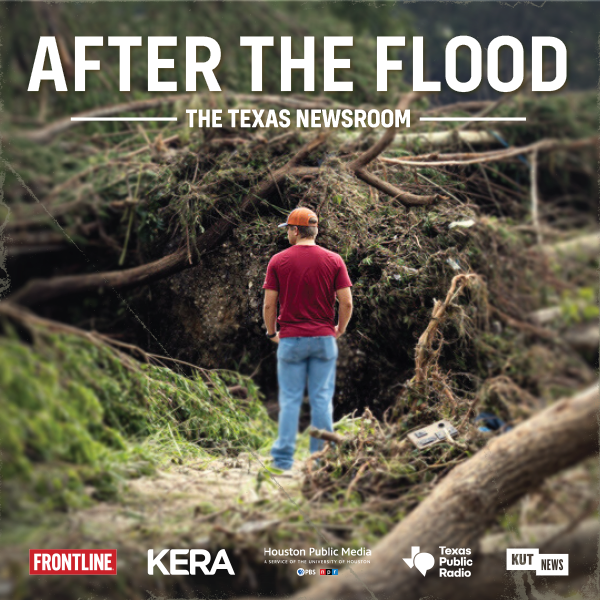
It’s been more than six months since deadly flooding killed more than 130 people across Central Texas and the Hill Country. Recovery is still a long way down the road. We’ll have an update from some of the folks still working through that process.
Plus, the ATX Free Fridge Project has been filling in gaps in food access across the Austin area for more than half a decade, but the project itself could use a little love and help these days.
And with a new year comes new art in the public domain. We’ll find out what’s been added in 2026.
The full transcript of this episode of Austin Signal is available on the KUT & KUTX Studio website. The transcript is also available as subtitles or captions on some podcast apps.
Jerry Quijano [00:00:08] The CDC reduced earlier this month the number of usually recommended vaccines for children. Now that change has flummoxed some parents and pediatricians in the area. We’re going to hear some of the questions that they have been asking. And it’s been more than six months since deadly flooding killed more than 130 people across the Austin area and the Texas Hill country. And recovery is still a long ways down the road. An update from some of folks still working through that process that’s coming up in today’s show.
KUT Announcer: Laurie Gallardo [00:00:36] The Austin Signal is a production of KUT News, hosted by Jerry Quijano.
Jerry Quijano [00:00:41] Plus, the ATX Free Fridge project has been filling in the gaps of food access across the Austin area for more than half a decade, but the project itself could use a little love and help these days. That story and a whole lot more coming your way, that is on today’s Austin Signal. Howdy out there, this is Austin Signal. Thank you for making us part of your day. It is Wednesday, January 13th. I’m your host, Jerry Quijano. Let’s get into today’s show. Changes in the Centers for Disease Control and Prevention’s new vaccine recommendations are causing questions among some parents and raising eyebrows among pediatricians. So what is going on and how are folks around here feeling about it? Well, to answer some of those questions, we are talking with KUT’s healthcare reporter. Olivia Aldridge. Olivia, thanks for joining us.
Olivia Aldridge [00:01:39] Hi, I’m glad to be here.
Jerry Quijano [00:01:40] So for folks who might not be familiar with the change, what specifically did the CDC alter here?
Olivia Aldridge [00:01:46] Yeah, the CDC announced a pretty big overhaul of its recommended vaccine schedule. So previously, that schedule basically included 17 vaccines plus an antibody treatment for RSV recommended for all kids at various ages in their life. Now there are only 11 vaccines recommended for kids. And those other six were kind of moved into different categories. So, now they’re recommended either for kids at especially high risk of severe disease or for patients who have gone through what’s called a shared clinical decision-making process with their doctor. So, essentially, that’s just parents chatting with the kid’s pediatrician and deciding whether to give them that vaccine. The shots affected here that are moved into those other categories are that RSV treatment And I mentioned hepatitis A and B, meningitis. COVID-19, the flu shot, and then rotavirus, which is a common infection that causes vomiting and diarrhea. And I want to add that this isn’t a requirement. It’s actually states that make requirements about shots that kids need for school. But many of these state laws reference the CDC guidelines. And those guidelines are also just an important resource for public health departments, health care professionals, and then the general public.
Jerry Quijano [00:03:05] Okay, well, our listeners are certainly going to be concerned about how Texans and Austinites could be affected. What has been the general reaction to this recommended change among pediatricians that you’ve spoken with?
Olivia Aldridge [00:03:17] There has been some confusion, I’d say, around like, why these vaccines? Because it’s not the case that there was some new study that shed doubt on any of these specific shots. The science is the same. So one pediatrician that I spoke to is now sticking to the vaccine schedule endorsed by the American Academy of Pediatrics, which aligns with that previous CDC schedule with the 17 shots. That’s common. It’s also true in some cases at the organizational level. So like Austin regional clinic pediatrics Texas children’s are basing recommendations on that American Academy of Pediatrics guidance
Jerry Quijano [00:03:54] Okay, so now let’s talk about the parental side of it. How have parents been reacting to this news?
Olivia Aldridge [00:04:00] Yeah. Um, I think there’s a lot of confusion. So, you know, one pediatrician that I talked to, um, said that she immediately started to get questions from parents that were like, what is this all about? Um, just generally a lot confusion about what information can I trust that’s not totally new. So this pediatrician, Dr. Marjan Linel, um. Even before this, she was getting a lot more questions, running into a lot More skepticism, you. Remember, the country’s top health official, Robert F. Kennedy Jr. Is a pretty prominent anti-vaccine activist, and there’s a lot of misinformation floating around on social media. So in Texas, parents do have some choice. So the state has vaccine requirements for kids entering school, but it’s possible to seek an exemption. So she really tries to meet parents’ concerns with care and give them the best information she can so that they can make an informed choice. She often sends folks. To some online resources from the Children’s Hospital of Pennsylvania, which have some really detailed information about what’s safe.
Jerry Quijano [00:05:05] OK, lastly, along those lines, we have about 30 seconds left. I know right now sickness is on a lot of people’s minds, flu, what have you. What is the flu vaccine recommendation? And is that affected in any of this that’s going on?
Olivia Aldridge [00:05:18] It is affected for for kids. The CDC isn’t officially recommending it for all kids anymore But right now during this very active flu season a lot of public health leaders are urging people young and old to get it It can help prevent those really serious flu cases that can put people in the hospital
Jerry Quijano [00:05:35] All right, we have been speaking with KUT’s healthcare reporter, Olivia Aldridge. You can find more of her reporting on this story and others at KUT.org, and we’re going to have it in our show notes for today’s show. Olivia, thanks for coming on the show. This is Austin Signal. Thank you for being with us. It’s been six months since catastrophic flooding tore through the Texas Hill Country, killing more than 130 people. As the Texas newsroom’s Lucio Vasquez reports, recovery is still far from complete.
Lucio Vasquez [00:06:13] It was just after midnight on July 4th, Joe Herrera said the rain sounded normal at first. Then it didn’t stop. Herrera, who has Parkinson’s disease, lives with his wife near the Guadalupe River in Kerr County, Texas. As the rain intensified, the river began to rise.
Joe Herrera [00:06:30] The water was all the way into the garage, pretty deep already, within minutes.
Lucio Vasquez [00:06:35] As it kept rising, a neighbor came to check on them, tied a rope around Herrera and helped pull him to safety. They survived, but their home was badly damaged. Their car was destroyed. Still, Herrera says he’s happy to be alive. He says he was back in his home two months later. Hundreds of other people weren’t so lucky.
Joe Herrera [00:06:54] Every day, I pray to God, thank you for what I have.
Lucio Vasquez [00:06:56] In a matter of hours, the river rose up to 37 feet. The region is expected to lose up to $22 billion in damage and economic losses. Recovery is far from complete, but daily life has largely resumed. Shops are open, restaurants are busy, traffic moves steadily along bridges that were once underwater. The Guadalupe River is quiet now. But walk closer to the river and the gaps appear. Empty lots where homes once stood. Fresh dirt where foundations were washed away.
Louis Amestoy [00:07:28] The beauty and the calmness of that river. And to see the damage that it’s done is really hard for people to understand. And that’s gonna take years to get over.
Lucio Vasquez [00:07:37] Louis Amastoy is a resident and journalist who’s been covering the flood for the Kerr County lead, a local online news source. He says the landscape tells only part of the story.
Louis Amestoy [00:07:47] These are people that have lived here their entire lives, you know, this is a pretty close-knit community.
Lucio Vasquez [00:07:52] The flood was one of the deadliest natural disasters in Texas history. At least two people, including an eight-year-old girl, remain missing. And as the water receded, questions followed about whether people along the river were adequately warned and whether the risk was fully understood before the storm.
Louis Amestoy [00:08:09] There’s a lot of questions to be answered.
Lucio Vasquez [00:08:11] One of those questions centers on the accuracy of flood maps produced by the Federal Emergency Management Agency, an agency that has also faced criticism for its response to the disaster. Former acting FEMA Administrator David Richardson was accused by some state and federal lawmakers of failing to show urgency as the crisis unfolded. He later defended the agency’s response during a congressional hearing.
Louis Amestoy [00:08:34] Texas got what they needed when they needed it.
Lucio Vasquez [00:08:37] Richardson resigned in November. Also, some residents said emergency alerts on their phones were inconsistent or never arrived at all. During a public hearing about a month after the flood, the Kerr County officials responsible for sending those alerts said they were either asleep or out of town as floodwaters began to rise. But for some families, the last six months have been about accountability. Four separate lawsuits are now moving through the courts, all connected to Camp Mystic. An all-girl summer camp where 25 campers and two counselors were killed. The summer camp recently announced plans to reopen later this year. Kyle Finley represents families who were suing Camp Mystic.
Kyle Finley [00:09:17] Have a child still missing. And instead of focus being on that, we’re talking about trying to open camp to gain additional revenue.
Lucio Vasquez [00:09:26] Attorney Michael Watts says investments made by Texas lawmakers after the flood should prevent another tragedy from unfolding. There will never be a flood death in this river again because we’ll have a warning system that we need. The state legislature approved nearly $300 million for upgrades to flood warning equipment, including new sirens along the Guadalupe River. Amistoy, who’s been covering the disaster in the same community he calls home, says recovery is far from over.
Louis Amestoy [00:09:56] We still have missing people. And I think that’s our community’s responsibilities to ensure that they’re not forgotten.
Lucio Vasquez [00:10:03] Amistoy says uncertainty still hangs over the Hill Country, for survivors still rebuilding and families seeking answers.
Jerry Quijano [00:10:12] That was the Texas newsroom’s Lucio Vasquez. You can find more from him and the entire newsroom over at KUT.org. Thank you for spending part of your Tuesday afternoon here with us on Austin Signal. Coming up, the ATX Free Fridge project has been in operation for six years, but they could use some help to keep the project moving forward. We’ve got that. And the new year means new items available in the public domain. Come here. What’s available? What can you mash up? That’s coming up next right here on Austin Signal. This is Austin Signal. For more than half a decade, the ATX Free Fridge Project has been helping to fill the gaps in food access across the Austin area. People in need can visit one of five outdoor fridges to pick up free food, no questions asked. But as KUT’s Katy McAfee reports, the project has recently hit a bit of a rough patch.
Katy McAfee [00:11:25] Within 10 sunny minutes on Tuesday afternoon, seven people stopped by a refrigerator on South 1st Street and Ditmar Road to pick up free food. The fridge is covered by a wooden pergola with built-in shelves for dry food and clothing donations. There’s also a bulletin board for folks to leave notes or sponsor community events. This is one of five fridges run by the ATX Free Fridge Project, which started during the pandemic to combat rising food insecurity rates. And it works sort of like a little library for food. Take what you need, leave what you can. No paperwork, no questions. The project has taken off since the pandemic. A few years ago, volunteers put door sensors on the fridges and found they were opened, on average, 300 times a day. Lannie Lee has been going to the Dittmar Fridge for years. He says this resource has been lifesaving, especially late last year, when a government shutdown delayed federal food benefits.
Lannie Lee [00:12:19] I remember not having any food, not knowing what was going to happen, not knowing how I was going eat, and this place has taken care of a lot of people.
Katy McAfee [00:12:30] But though these fridges are well frequented, not all of them are well cared for. Next to the cans of crushed tomatoes and vegetable soup at the Ditmar location is a pile of dirty, wrinkled laundry. Trash is strewn about the area. Lee says lately he doesn’t want to open the fridge without gloves on.
Lannie Lee [00:12:48] Everybody’s touching everything in there. There’s germs and there are some people that come and clean and help out. Lots of us do. We pick up the trash, but it’s a never ending process to clean up and sanitize it.
Katy McAfee [00:13:01] Stephanie Castleberry, one of the five volunteers heading the ATX Free Fridge Project, says the Dittmar fridge will close by the end of the month because keeping it clean has been impossible. A fridge on Second Street closed late last year for similar reasons.
Stephanie Castleberry [00:13:15] Try like we put out the calls to action we set up text chains to like tell people hey this is going on can you go clean it but it’s just not enough you know we need everyone who’s going to the fridges to just take that step take care of it because the second street was a huge loss Dipmar is going to be a huge loss for that neighborhood.
Katy McAfee [00:13:31] There’s a spreadsheet on the ATX Free Fridge website where community members can sign up to clean their local fridge, but almost all the spots are unfilled.
Stephanie Castleberry [00:13:38] You know, we’re just five volunteers who like, we have day jobs, you know, we do this in our free time and like, um, we do our best to try to like, make sure the fridges are operational and everything like that. But like the people who are going to the fridge is regularly, we really need support from those full.
Katy McAfee [00:13:57] Castleberry says, from the start, the Free Fridge Project has been rooted in, quote, anarchy. It’s a way for community members to help each other out when conventional welfare systems fail. A key component of the project is anonymity. On one hand, that might make it easier for someone to get food when they need it. But less face-to-face interaction also makes it tough to ensure people are on same page about caring for the fridges.
Stephanie Castleberry [00:14:20] That’s why we’re trying to do more community meetings. And we started a Discord so that we can try to like connect with more people, get people talking to one another. And you know, hey, that’s not how you’re supposed to donate food. Like let’s do this.
Katy McAfee [00:14:35] Castleberry is hopeful the fridge project will make it through this rough patch. Volunteers have early plans to set up three more fridges in Montopolis, Franklin Park, and North Austin neighborhoods this year. And they aren’t giving up on the Dittmar community. They’re looking for a new place to put a fridge nearby and give the South Austin neighborhood a fresh start. I’m Katy McAfee in Austin.
Jerry Quijano [00:15:01] Technology has made it easier than ever for anyone out there to reimagine a piece of music, a book, even a movie. And many artists battle to protect their copyrighted work from the algorithmic meat grinder in the parlance of our time. But as the new year begins, more creative works are now fair game for anyone, human or machine, to chop up, mash up, or glow up as they wish. Texas Standard’s Shelly Brisbin takes a look. At what’s newly free from copyright.
Shelly Brisbin [00:15:38] Like clockwork, each January 1st, media historians, academics, and creators eager to remix works of art from the past celebrate Public Domain Day. On the first day of 2026, works of artwork from 1930 along with sound recordings from 1925 lost copyright protection.
sound recording [00:15:56] Yes sir, that’s my baby. No sir, don’t mean maybe. Yes sir that’s ma baby now.
Shelly Brisbin [00:16:04] That means that anyone is free to adapt these works, from novels, comics, musical compositions, and films, in any way they like. For me, this public domain day marks a dividing line in time. 1930 is the year of my mother’s birth, so the way I imagine the modern world has always begun there, now 95 years ago. From my mother, I learned to love film. Sitting on the floor, watching old movies she’d grown up with. I became a passionate student of film history, and I found that 1930 marks a bright line between early clumsy examples of sound filmmaking and the era when Hollywood studios and directors began making sound masterpieces at all-talking epics.
sound recording [00:16:47] Give me a whisky, ginger in on the side, and I’ll be stingy, baby.
Shelly Brisbin [00:16:54] Greta Garbo first spoke on film in 1930. The movie was Anna Christie, made by MGM and frequent Garbo director Clarence Brown. Garbo Talks was the tagline. And now creators are free to drop her throaty Swedish accented voice into their own creations. Also in 1930, John Wayne donned his first spurs and cowboy hat and the big trail.
sound recording [00:17:17] Hello, Coleman. Howdy, Walmart. Changed my mind. I’ll scout for that bull train after all. Well, that’s a rare sunshine. Take hands before you change your mind again. Got a good wagon boss for the trip?
Shelly Brisbin [00:17:31] And the Marx brothers first cracked wise on film in Animal Crackers. Louis’ Milestones All Quiet on the Western Front was a new kind of war film in 1930 that centered the experiences of Germans who fought in World War I. It’s still regarded as among the most important anti-war films ever made.
sound recording [00:17:48] And I, too, look to you, Paul Balmer. I wonder what you are going to do. I want to go! Me too! I don’t see that. The Kaiser’s got everything he needs. Well, he never had a war before. Every full-grown emperor needs one war to make them famous. I’ll tell you how it should be.
Shelly Brisbin [00:18:10] In a kind of copyright twofer, a film called Cimarron and the book it was based on are now both in the public domain. The movie won the 1931 Best Picture Oscar, and the books is by Edna Ferber, who would go on to write the Texas epic, Giant.
sound recording [00:18:26] It was called the Oklahoma Land Rush. We’re going off to a brand new two-fisted rip-storm country. Full of Indians, random snakes, gun porters, and death parados! Whoopee! And a pioneer family helps turn a wild frontier into a proud state. Did you have to kill him like that? You know, I could have let him kill me. Richard Dix and Irene Dunn star in the only Western to ever win Best Picture. Timuron.
Shelly Brisbin [00:18:56] William Faulkner’s As I Lay Dying enters the public domain, and 1930 was a great year for detective stories like Dashiell Hemmett’s The Maltese Falcon and the first four Nancy Drew novels by Carolyn Keene. For kids, there’s A Little Engine That Could, an illustrated edition by Wadi Piper that has been popular for generations. And 1930 marked the first appearance of the characters Dick and Jane in Elson’s Basic Reader. Cartoons and animated characters always attract remixers and adapters, as happened when the first Mickey Mouse cartoons became free to use a few years ago. This year, there are nine new Mickey cartoons up for grabs, but the big news is Betty Boop, the bubbly, high-voiced girlie who’s already been reimagined across the decades in advertising and fashion. But now, the real thing, the original from Fleischer Studios, a more audacious version of Betty, is free for all.
sound recording [00:19:55] But when I’m having my lobsters, I have to have poop-poop-ba-doop-be-da-da. Oh, oh, oh!
Shelly Brisbin [00:20:05] If you’re a copyright lawyer, the subject of music and public domain day might just keep you in small talk at any cocktail parties you happen to attend. But for the rest of us, music copyright can get complicated. Music published in 1930, the notes and lyrics, is now free to use. George and Ira Gershwin’s I Got Rhythm and Embraceable You are included, as is Hoagy Carmichael’s Georgia On My Mind. But the famous Ray Charles version of Georgia recorded much later, and Ethel Merman’s I Got Rhythm. Recorded in 1930, by the way, are not. Copyright law has a special carve-out for sound recordings, giving them 100 years of protection instead of the 95 for music compositions and other works. This year, that means St. Louis Blues, recorded in 1925 by Bessie Smith and featuring Louis Armstrong, enters the public domain, along with civil rights pioneer Marian Anderson’s haunting version of Nobody Knows the Trouble I’ve Seen.
sound recording [00:21:30] O’er the land of the free and the home of the
Shelly Brisbin [00:21:40] There’s also Gene Austen’s Yes Sir That’s My Baby and Fascinate in Rhythm by Paul Whiteman and his orchestra. Whiteman, by the way, is the subject of 1930s King of Jazz, an inventive and sometimes surreal film that also enters the public domain this year. And if you’re wondering, those Whiteman songs within King of jazz are copyright-free now because the law says sound recordings that are part of a film fall under the same rules that the film itself does. So feel free to work on your best remix of Happy Feet. For the Texas Standard, I’m Shelly Brisbin.
Jerry Quijano [00:22:24] And that is it for today’s show. Thank you to Olivia Aldridge, Lucio Vasquez, Katy McAfee, and Shelly Brisbin for helping us cross the finish line today. If you’re listening on the podcast, you can find more of their reporting in the show notes for todays episode. And as always, you can all of our work over at kut.org slash signal. Kristen Cabrera is the show’s managing producer, and Rayna Sevilla is the Signals technical director. I’m Jerry Quijano. We’ll be back with you tomorrow at the same time. We will talk to you then.
This transcript was transcribed by AI, and lightly edited by a human. Accuracy may vary. This text may be revised in the future.