
 Listen

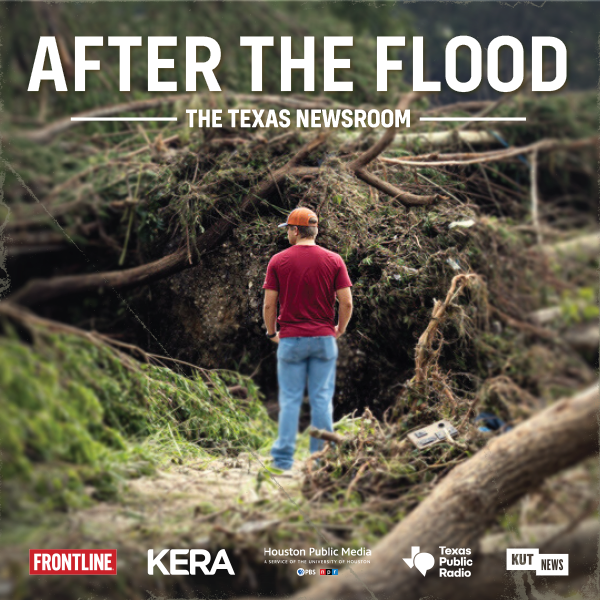
The Texas Hill Country has been impacted by torrential rains and devastating flooding for the second July in a row. Climate scientists have predicted this very thing for many years now.
The Austin school district has charged thousands of dollars for public information requests in the past year from parents, policy experts and journalists. Critics of the costs are worried that this leaves the community in the dark on decision-making.
We talk about mythology in media with Austin author Ponle Oluwole, who’s just published his debut novel, “Àyànmó.”
The World Cup may be over, but there’s still plenty of soccer on home soil coming over the next year.
Austin Signal is made possible by listeners like you. You can support our work by making a donation at supportthispodcast.org
The full transcript of this episode of Austin Signal is available on the KUT & KUTX Studio website. The transcript is also available as subtitles or captions on some podcast apps.
Jerry Quijano [00:00:08] This is the second straight July where the Texas Hill Country has been impacted by torrential rains and devastating flooding. Climate scientists have predicted this very thing for many years now. We’re gonna tell you why. And the Austin School District over the past year has charged thousands of dollars in public information requests to parents, policy experts, and journalists. Critics of these costs are worried this leaves the community in the dark on decision making. We’ve got more coming up on today’s show.
KUT Announcer: Laurie Gallardo [00:00:34] The Austin Signal is a production of KUT News, hosted by Jerry Quijano.
Jerry Quijano [00:00:39] We are going to talk about mythology and media with an Austin author who’s just published his debut novel, plus the World Cup in America may be over, but there’s still plenty of soccer on home soil coming over the next year. We’ve got those stories and more coming up next. It’s all right here on Austin Signal. Howdy out there, this is Austin Signal, I’m your host Jerry Quijano. It’s Monday, July 20th, thank you for tuning in. The Lower Colorado River Authority opened floodgates at Mansfield Dam following last week’s heavy rainfall across the Texas Hill Country that filled Lake Travis. It’s the first time Mansfield floodgats opened in years, but with two record-breaking floods in the area almost exactly a year apart, reporters are hearing the words climate change from the people affected more than before. But what link, if any, is there between these repeated summer storms in our atmosphere? Mo’s Buchel covers the energy and environment for KUT News. He is joining us now to explain. Hi, Mo’s. Hey, Jerry. So can we tell if this is an example of climate change? Is it too early to do that?
Mose Buchele [00:01:54] Well, what climate scientists say is that it’s really tricky to attribute a given specific storm to this broader trend. So it is too early to point to the floods that we saw last week and say this is definitely a result of climate change. But what they can say and are saying is that is an example of what they’ve been addicting. For decades now, that there would be increased flooding in places like Texas, and that atmospheric warming is certainly as a matter of science, as a manner of physics, contributes to greater rainfall.
Jerry Quijano [00:02:35] We’re talking about climate change. I feel like a couple of decades ago, it used to be more the talk was global warming. The warming part is what scientists attribute more rain. That’s the reason why they think more rain is happening, correct?
Mose Buchele [00:02:46] Yeah, that’s exactly right, Jerry, that the fact is, and again, this is just basic science, that warmer air holds more water. And so as the atmosphere warms, which it is doing, the air is able to hold more water and that translates into heavier rainfalls when the other weather conditions that are necessary that create rain, when those conditions are met, it will increase the amount of rain that falls. And that’s what we saw. Just last week
Jerry Quijano [00:03:18] Okay so tell us Moe’s more about what’s happening with the warming Gulf right now.
Mose Buchele [00:03:24] Yeah, and that’s another part of it, right? So the Gulf Coast is warming at about twice the rate of the rest of the ocean. And that allows more water to evaporate into the air. Again, just last week we saw a warmer Gulf pushing humidity into this hot summer air as we see every summer. So that air is supercharged with humidity and it blows over Texas. And in this case, it encountered weather conditions that primed it to rain. And so then it rained. A lot. It was massive rainstorms, of course, which translate into this catastrophic flooding.
Jerry Quijano [00:03:59] Here in Austin in central Texas, it feels as though like when Memorial Day weekend rolls around there’s this possibility that if it’s going to rain things might get a little wild. Should we expect more flooding like this next year around this time? What are you hearing from scientists?
Mose Buchele [00:04:16] Well, you know, again, like July floods, heavy rainstorms in July have traditionally been unlikely. You know, it’s rarer to get big rainstorm in the middle of the summer or approaching the middle of the Summer than it is in the spring. But again, we do know that floods are increasing and are predicted to continue to increase as these climate trends continue, as the atmosphere continues to warm. So… You know, meteorologists say it’s still unlikely that we get another big flood next July, but the long-term trends are heavier floods into the future.
Jerry Quijano [00:04:54] The City of Austin this weekend opened up the Mansfield Dam because of all the rainfall it had and happened in quite a number of years. What is the significance of that?
Mose Buchele [00:05:03] Yeah. Um, so, you know, the Mansfield dam is a, uh, it, it creates Lake Travis, right? And part of Lake Travis’s function is not just to store water for water supply, but it acts as a flood control reservoir. Lake Travis is built with a ton of extra capacity. This is like empty space that’s left empty just to capture waters in the event of massive floods, like we just saw. So, uh. It floods all around the Colorado river basin. It rains all that water. Eventually… As dams further upriver are opened, finds its way into Lake Travis. And once Lake Travis hits a certain level, the LCRA, which is the agency that controls this reservoir system, can open up the gates at Lake Travis to allow that floodwater to start going downstream. The idea is that they can manage this water flow in a way that’s safer than if it was, of course, just kind of a raging river flood. And so that’s what we saw happen. This weekend and we continue to see if you go down and look at Lady Bird Lake if you look at Lake Austin You look at the river down from the Longhorn Dam You see you see a real fast-flowing river people are are not supposed to go there right now The city says it’s dangerous It’s off limits to get on the water and that water is going to make its way all the way down To eventually to the Gulf of Mexico So yes, it is it is significant It does not happen every year but it is operating as it’s supposed to in the case of of you know big flooding storms.
Jerry Quijano [00:06:31] All right, that is Mo’s Bouchelle. He is KUT’s energy and environment reporter. We’re gonna have more of his reporting in today’s show notes. Mo’s, thank you. Thanks so much, Jerry. As Austin ISD considers more school closures and further cuts to programs to shore up a potential budget deficit, one way parents, journalists, and policy experts have been seeking information about decision making is through public records requests. But according to Austin Current, the price tag on those requests has been steep. The district charged more than $170,000 in estimated fees for requests made between June of last year in June of 2026. Acacia Coronado is the education reporter for Austin Current. Acacia, thanks for coming back on the show.
Acacia Coronado [00:07:19] Thanks for having me.
Jerry Quijano [00:07:20] So Kassia, tell us, was this just one total of public records charges or is this a total charge?
Acacia Coronado [00:07:28] So it was $172,000 total between all 80 invoices that were sent between June 10th of last year and June 10 of this year.
Jerry Quijano [00:07:37] Okay, we’re obviously always talking about money when it comes to AISD sometimes, and the millions of dollars. Is $172,000 a lot in the grand context of public records charges?
Acacia Coronado [00:07:49] So what experts say is that they are seeing a trend that public records are sometimes costing more now, especially with local agencies. So I wouldn’t say that they’re isolated, but it is definitely a trend amongst local agencies, including Austin ISD, that these charges are getting pretty expensive for some people.
Jerry Quijano [00:08:09] Okay, well you talked with some folks about the amount of money that they paid for their public records requests, what did they have to say?
Acacia Coronado [00:08:15] So their main concern is that the cost just made the records unachievable for them. It was completely out of reach for someone to pay $14,000, even if they’re requesting it in a professional capacity. Most agencies don’t have $14000 to spare. So the main concern is that even if the make the request smaller or reduce it, it’s still changing what they have access to based on the cost.
Jerry Quijano [00:08:45] And as a reporter, I’m sure you’ve submitted some of these requests. What are you normally asking for? And so like, could you give us one example?
Acacia Coronado [00:08:53] It really varies depending on what we are looking into, but typically we can request email communications, written communications about specific circumstantial decisions made. In some cases, logs or lists of things, such as in this case, the log of invoices.
Jerry Quijano [00:09:14] Okay, now is there a set of prices approved by the state when it comes to state records?
Acacia Coronado [00:09:19] So the state does have some regulations around what can be charged and what they can charge for. And that is all on the attorney general’s website. So the attorney generals office kind of controls and make sure that records are not charged too much for and that people are charging for what the law allows them to charge for
Jerry Quijano [00:09:43] You said this is part of a bigger trend, can you say a little bit more about that?
Acacia Coronado [00:09:47] So experts are concerned that because some local agencies, not just in Austin, but in general across Texas, they have seen are charging more for records and for producing some of these requests, it is starting to become a factor in whether normal people can access information about local agencies. And I did ask them about state agencies They did not have too much research on that one yet. But it is a trend that some experts are seeing, particularly those who request more often.
Jerry Quijano [00:10:24] As you said, anyone can or should be able to obtain public records, but when the prices are so high, how does that affect public trust?
Acacia Coronado [00:10:32] When something has a high cost, it can become prohibitive to somebody being able to pay that. And so for example, parents who are trying to request communications about how schools were closed or how decisions about boundary changes happen might not be able to access those if the costs come back in the thousands to provide that information. Those are for example the kinds of things that we have requested communications on in the past. And some of those requests have come back in the thousands. For us, our current total is upwards of $4,500.
Jerry Quijano [00:11:09] Okay, we have been speaking with Acacia Coronado. She is the education reporter for Austin Current. They are our reporting partners covering the city of Austin. Acacia, thank you for your time. Thank you. You can always find more from the work we’re doing here at AustinSignal at kut.org slash signal. And we’re going to continue to follow the flood and recovery situation in the Texas Hill Country. And we have more reporting on that at k ut.org and on the KUT app. We have more Austin Signal coming up after this break. Stay with us. This is Austin Signal, welcome back. Well, after 104 mostly thrilling matches, World Cup 2026 came to an end yesterday with the throning of a champion. Here to tell us more is our champion and one of the hosts of the Vamos Verde podcast, Jimmy Moss. Hello, James. Hello. So you, as well as your co-host Juan Garcia, thought that Spain was a top team heading into this tournament. Did your faith ever get shaken before yesterday’s game?
Jimmy Maas [00:12:25] I said they were going to win before it all started. I think, um, just the, the volume of games and the age of that team coming into peak at the right time, they had all the right players coming back from injury at the, right time. Rodri was given, uh, the, uh player of the get the tournament. He had a terrible professional season with his club, but you know, he was coming back from a ligament tear. So. You know that doesn’t happen overnight. We all are fairly familiar with that from all sports. So He he peeked at the right moment all these other players peeked to the right. Moment It’s a style that allows other people to integrate into if you’re familiar with it So there’s not a drop when you go from the top 11 to the 16th 17th player on your bench uh, this is uh, This is why I thought they were going to be a pretty solid choice and they did not prove me wrong. It’s also impossible to score if you don’t have the ball, which they proved yesterday was 70% possession. Argentina, just 30% of the time had the ball and they took no shots.
Jerry Quijano [00:13:30] Yeah, okay, well European leagues are still on a bit of a break, but Major League Soccer says thanks world We’re gonna take it from here And it’s gonna be a busy year between now and next summer for Major League soccer Can you remind us of the scheduling changes happening? It is packed
Jimmy Maas [00:13:43] And in fact, games start this two days from now, Wednesday night. So they will they will cram in a Leagues Cup tournament. The rest of the MLS year, they will end that. They will start a mini season next spring, February, actually. If the short sprint, they’re calling it, I think, and that will go until May. A mini season will end then that will be the official 2027 year. And then next summer, they will take another break like they did for the World Cup this year. And launch on the international calendar, more familiar with if you follow other leagues, we’ll go basically a school year for the MLS season.
Jerry Quijano [00:14:20] Okay okay we have plenty of that action here in our backyard uh… Tell us about what’s going on with austin fc if we weren’t paying attention prior to the world cup and they were coming in and we want to get involved with the club was going on that
Jimmy Maas [00:14:32] Well, they have been, it’s been a, a time of change for them. They just before the world cup, they let go their manager, they let go, their sporting director. They are under interim management right now. They have hired a full-time coach. However, he will not be coming into the fold until at least full time. I’m sure he’s advising a phone call away if you will, but, uh, he will not become an end of the fold, until the winter time after the season ends, so, uh they have added a player, they have. But it’s going to be pretty much a very similar lineup. They do have a lot of players coming back from injury. Also, Dadi Pereira was traded to Montreal. So one of the original, actually, if you think about it, he’s the original. Because draft pick of Austin FC. He’s now out, he’s now in Montreal, and so it’s kind of a new era for Austin FC overall. Some threads of continuity there. Dave Yarno has been with the team from the jump, so there’s some wispy hairs that we can all cling onto and hold onto through the rest of the fall.
Jerry Quijano [00:15:35] Well, if you want to keep up with what’s going on at the club, make sure to subscribe to the Vamo’s of out of the podcast wherever you get your shows. We have been speaking with Jimmy Moss. He is one of the hosts of the show and he and Juan have been doing a great job keeping folks across the country updated on the tournament. Jimmy, thanks for your work. Thank you. The Odyssey hit theaters over the weekend, and while Christopher Nolan is considered a visionary in his medium, the story of the Odyssey and its Greek mythology is pretty universally known. For lesser-known mythology of other cultures to rise in popularity into the Zeitgeist, it’s often championed by a person who felt the need for more representation. Think K-Pop Demon Hunters as one example. Now one Austin-based author is hoping to share African culture and Yoruba mythology with readers. His debut novel is called Ayamo Ibere, and joining us in studio is the author Panle Oluwale. Panle, thank you for being with us.
Ponle Oluwale [00:16:38] Thank you so much for having me.
Jerry Quijano [00:16:39] Tell us a little bit about the inspiration. Where did this idea come from?
Ponle Oluwale [00:16:42] Awesome, so it’s based on Yoruba mythology. I grew up in Nigeria and it’s essentially about this girl who has to journey to find the meaning of her life while her memories are sealed. So she’s thrust into this world that’s very dangerous, very brutal. There’s an insane war going on and she has to kind of fight in this war because the more she explores, the more thrust herself into dangerous situations, the more she uncovers her identity. So it’s just a journey about self-discovery, about what people really do when they’re faced with insurmountable odds.
Jerry Quijano [00:17:19] So one thing that caught my attention is the book starts with the main character being chased and there’s an animal there’s a hunter that using the blood and it’s like very is it really grabs your attention but my attention was also grab because the prolog starts about six hundred years before why did you want to choose fantasy as a genre.
Ponle Oluwale [00:17:38] I think from when I was young, I’ve always been someone who was drawn into magical worlds and I found myself lost in these worlds. You know, I grew up reading Harry Potter, Percy Jackson and Lightning Thief, all these amazing stories by incredible authors. And I wanted to write something from my younger self to be able to read and feel connected with the characters, connected with the world and the culture of the book. So that was the inspiration for Ayumu.
Jerry Quijano [00:18:05] So, your book draws from your book, Culture, and even features a glossary at the front to help people sounding out names and words and things like that. Why was that so important to include?
Ponle Oluwale [00:18:14] So one of the things I wanted to ensure was that the book was authentically representing my people and the names and the pronunciation of certain words are a very important factor to that. So the names in the book are all spelled out using the Yoruba alphabet. And it’s obviously something that can be confusing or new for people who aren’t familiar with it. So I think it was important to just have that at the beginning, that as a way of people realize like, okay, this is how O like oh with a dot below it is different from like a regular oh um we have the kind of like accents on top of vowels too because Yoruba is a tonal language so the actual like meanings of words even though you’re spelled the same can be different because of the tones that are put on it so that’s why those things are important to kind of share with people before they dove into the story. For us the listening audience can you
Jerry Quijano [00:19:06] Can you say the character’s name as it should be said appropriately?
Ponle Oluwale [00:19:10] So the name of the protagonist is Eniola, and it means a person of great fortune.
Jerry Quijano [00:19:16] Authentic representation is really important to us especially on the radio. You know, there are lots of here in Texas There are lots or Spanish or German or words from all over Yeah, and I noticed that there is already an audiobook version of your novel as well Yeah, how did that how is that sounding and how important was it to have that real representation and that voice?
Ponle Oluwale [00:19:35] So I love the narrator for the book, Delia Ogunira. She is incredible voice actress and a talented actress. She’s been on actually like NCIS, Black Panther, a bunch of really cool shows. I didn’t know that until I saw her Instagram. I was like, whoa, I know who this person is. Yeah. So like when I got reached out by the publisher for the audiobook deal, I was, like, I need, you know, final approval on whoever you get for the because, you know, I’ve heard a couple books reading by… Whether it’s like African or Nigerian authors. And I felt the narrator wasn’t really doing the best job of accurately representing the tone of the story. So I felt that was something that was extremely important to the work I was putting out. And they were like, yeah, we love that. We love the idea of it. And they went and they found the perfect person for it. It’s been lovely to literally listen to something I spent years writing just come to fruition. And I can just express how just… Privilege and blessed I am.
Jerry Quijano [00:20:35] Well, it’s a very well written book and I look forward to listening to the audio version as well, but there’s a striking cover to your book. And in fact, you actually invite people to judge your book by its cover. Tell us more about that cover. Who did it and why was it so important to have that striking image at the front?
Ponle Oluwale [00:20:52] Yeah, so just the way the storytelling is important, the visual element of every book, the art is also extremely important. For that, I met this photographer. It’s actually like a real model on the cover, Maiwa Lawa. He does African maximalism. And the first time I came across his, like the algorithm just led me to his page one day. And I actually had saved his page, like I am gonna work with him. One day. And then when I was getting to the point where I was like creating a book and getting all the art and everything ready for it, I reached out to him. I was, like, I have this idea and I think you’re going to be perfect for it. And he just went to town. He created that, you know, the striking red cover with the ax on it. And I think just it really, like you said, invites people to the world and the story. It draws you in, but it scares you a little bit.
Jerry Quijano [00:21:38] Too because you mentioned that big war accident feature. Can you tell us about the significance of that weapon?
Ponle Oluwale [00:21:44] So I don’t know how much I want to spoil of the story. Just tease it then use it out for us. So I would say that weapon has a very significant role on the actual inception of humans in the story and it’s personal significance to the character is sort of an heirloom and it is a boon that really aids the protagonist Inyala on her journey. As I said, the world is very brutal. The representation of this teenage girl wielding that giant ax really juxtaposes her innocence with the brutality of the situation she finds herself in and how she just has to wield that to kind of cleave her way through every obstacle. So I just love the visual nature of that message.
Jerry Quijano [00:22:33] Absolutely. It’s very striking. We’ll have a link to that in the show notes so you can check it out When I was in school at least here in Texas Greek mythology is what we were taught And even now when someone talks about mythology it tends to be the first thing that comes to mind There’s big Christopher Nolan movie, but the mythology of other cultures is just as intricate and interesting yet It’s not as well known. I would say like a Mesoamerican for example your novel highlights Yoruba mythology this is a big question, but What are you hoping folks take away from your story so that it’s top of mind when they think of mythology?
Ponle Oluwale [00:23:08] I think one of the important things about mythology is opening people’s minds to different ways of thinking. And cultures very strongly represent how they think by their creation, like ethos, like how they feel the world was made, how they felt the elements and nature plays a role with people’s relationship with the world around them. And I think having Yoruba mythology is something that is very different from like a Greek mythology from a Chinese or Japanese mythology is a way to invite people into the continent of Africa, to invite people into Nigeria. So they themselves can be drawn into this world. And then when they meet people, when they encounter art, when they encounter different cultures and individuals, there’s a more open mindedness to embrace that difference between individuals.
Jerry Quijano [00:23:57] I mean your your novel is very inviting and I noticed in the glossary page This is the first book in a trilogy. So where is the story going next? Have you started working on book two is this kind of a huge idea that you’re breaking down into smaller parts So how is that going?
Ponle Oluwale [00:24:13] So it is like a very long journey. So I actually had the idea for this when I was like 13. It took a few years before I actually put pen to paper, but it is a very large story. It’s an epic fantasy, so there’s a lot that’s involved. And yes, so the first book starts in one continent, and the next book explores other parts of the world. So I am halfway through the second book at this point. It’s been, I think I’m writing it much quicker than I wrote the first one. But it’s just been really fun to like create this world and build it out. And I actually enjoy it, right? Like I laugh sometimes when I’m reading things, like I feel the emotions of the character. I think it’s one of my favorite things about writing. So yeah, it’s this, there’s a lot that is going into the story. And I really hope that when people will read it and when people. Interact with it, they enjoy that and they feel that well-roundedness of the world that I’ve created.
Jerry Quijano [00:25:10] Yeah, well, we’re lucky right now to be being watched by your wife and your daughter. Your daughter is just a few weeks old right now joining us, has she made you write quicker?
Ponle Oluwale [00:25:18] Oh, definitely. I need to finish this book so when she’s old enough to read, she’s like, okay, I can read the books my dad has written. So I think it’s really important for her to have, because I think a lot of people have been doing really well to, like you said, promote different cultures. Like there’s Black Panther, there’s like Tomi Adeyama, she wrote Children of Blood and Bone. There’s like really a lot authors are just putting great work out there. And it’s important that everyone is able to add to the conversation because like you said, Christopher Nolan has obviously coming out this Percy Jackson and the Lightning Thief. There’s like all these different variations of stories and the more people like put into the conversation, the more it’s able to really impact people’s lives and just enrich the cultural fabric of our society.
Jerry Quijano [00:26:07] Fantastic. Well, we have been speaking with Ponle Oluwale. His debut novel is Ayanmo Ibere. It’s out now. We’re gonna have a link to the novel in today’s show notes. Thank you, Ponle.
Ponle Oluwale [00:26:16] Thank you, Jerry.
Jerry Quijano [00:26:18] And we had a much longer version of that conversation in the podcast version of our show. You can find that at kut.org slash Signal and wherever you listen to your shows. That is it for us today. Thank you for tuning in. Thank you to Reyna Sevilla. She is our technical director. Alexandra Hart is our producer. Kristen Cabrera is our managing producer and I’m your host, Jerry Keconnell. Austin Signal is gonna be back at the same time tomorrow. We’ll talk to you then. Have a great day.
This transcript was transcribed by AI, and lightly edited by a human. Accuracy may vary. This text may be revised in the future.